Europe Is Being Rewritten. Here’s What That Actually Looks Like
From Budapest to Rome to Beijing: How Europe’s Political Certainties Collapsed in One Week

Three countries, three governments and three different points on the ideological spectrum. In the space of one week, all three shifted at once. And at the centre of each, Europe's relationship with Washington, Moscow and Beijing, and what those relationships are now actually worth. In each of this week's stories, the answer leads to a woman.
If you would like to support our initiative to build a truly inclusive, insight ecosystem for leaders across geographies and sectors: Drop us an email to learn more: newsroom@chiefbrief.org
Budapest: Rebuilding What Orbán Left Behind
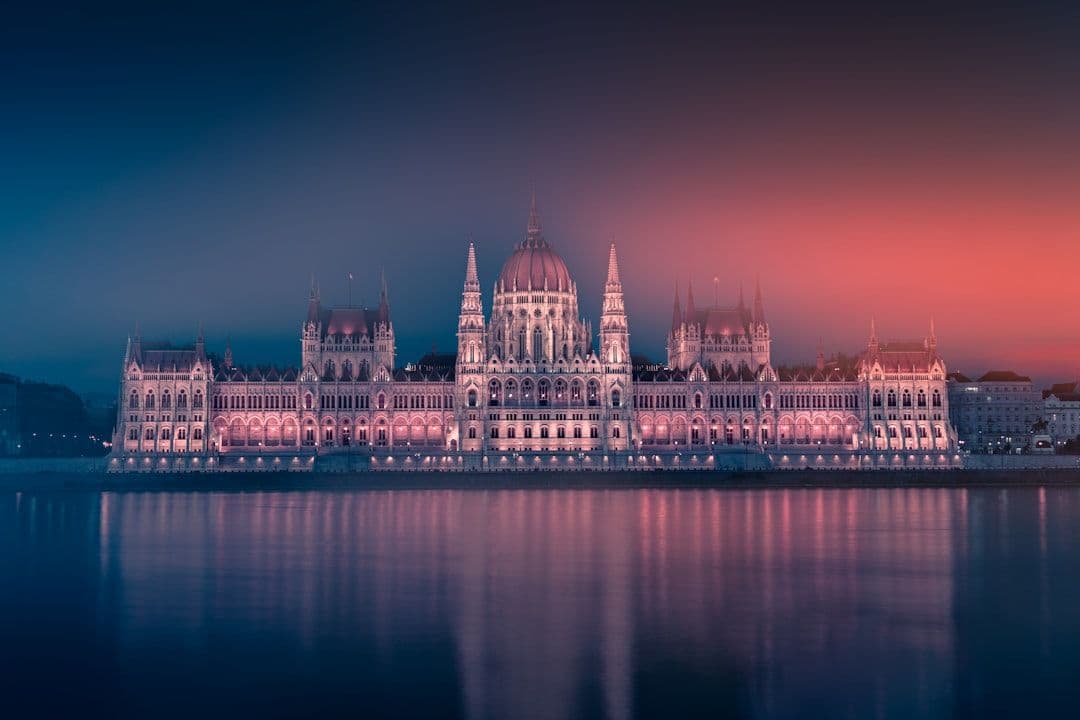
On Sunday April 12, The Tisza party secured 138 seats in the 199-seat Hungarian parliament on 53.6% of the vote. Incumbents for 16 years, the Fidesz party took 55 seats with 37.8%.
As we at The Chief Brief have been predicting: Turnout was the highest since the fall of communism with Prime Minister designate Péter Magyar leading what observers hope, will be a new chapter for Hungary.
Viktor Orbán: Washington’s favourite European, Moscow’s most useful man inside the EU, and Brussels’ most expensive headache for a decade and a half, conceded before the vote counting was complete. The result was irrefutable half way through. Calling it “painful but clear,” Orbán told his supporters they would serve Hungary “from opposition.” Then, characteristically he added: “We are not giving up. Never, never, never.”
Péter Magyar it should be said, was, till just two years ago, very much a Fidesz insider, breaking away amidst disagreement with Orbán. And Tisza does not exactly represent a liberal win. More like as Magyar himself describes, “a good kind of populism.”
And the issues it won on, are the same facing other EU member countries: economics and corruption.
The Chief Brief has been tracking two women who will be at the centre of what comes next in Hungary.
And we’ve been doing it far before global media houses began to learn their name after this election win.
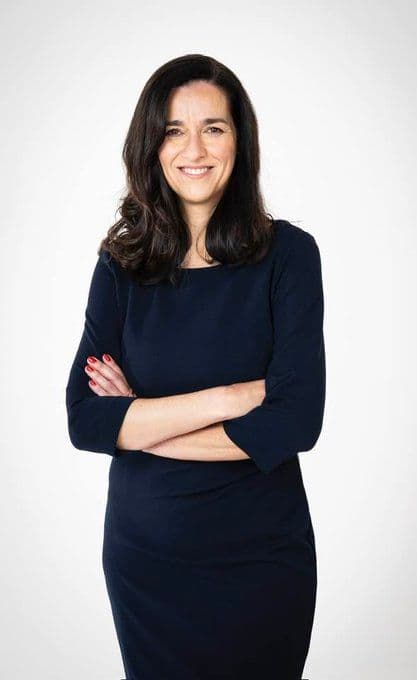
Anita Orbán — no relation to the outgoing Prime Minister (worth stating repeatedly and plainly) is Hungary’s Foreign Minister-designate. The former Ambassador-at-Large for Energy Security, LNG/ telecom sector veteran, and the primary architect of Tisza’s pro-Western foreign policy realignment. She is Hungary’s signal to Brussels that the country’s 16-year old rebellion is over.
And her framing has been consistent throughout: “Hungary must stop being a stick in the spokes and start being a spoke in the wheel — part of a working system, not its breakdown.”
Whether that statement will translate to policy will have to be seen. Hungary receives most of its crude via Russia’s Druzhba pipeline, its natural gas through Russia, as well as its nuclear power. Prime Minister designate Péter Magyar has set 2035 as the target for complete Russian energy cutoff. But he has acknowledged, the EU’s 2027 deadline is not feasible for Hungary. Anita Orbán biggest challenge will be to engineer the transition without the Hungarian economy collapsing under the weight of it. Read more at Foreign Policy
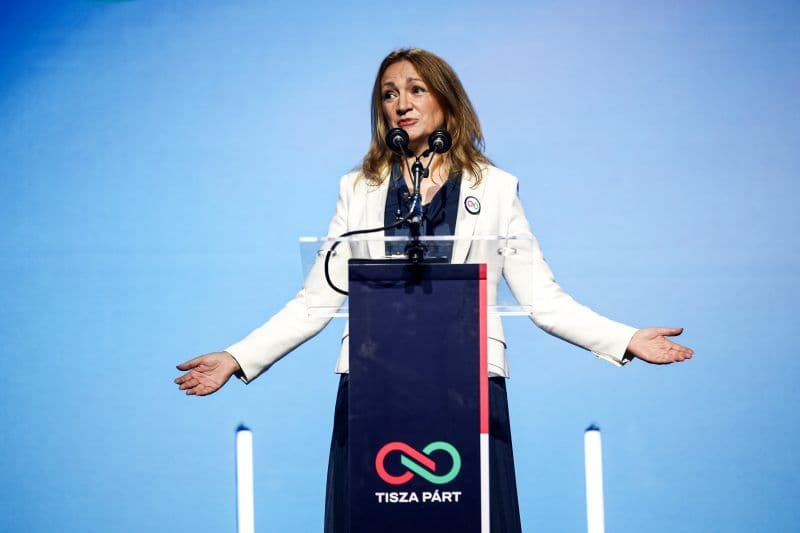
The other woman Tisza will bank on? Andrea Bujdosó.
She is Tisza’s parliamentary lead, its resident finance guru and widely considered its institutional architect. She has the less visible and arguably harder job of dismantling the Fidesz patronage network from the inside. After all, sixteen years of institutional capture: courts, audit offices, state prosecutors cannot be unwound because an election has been called and won. The super majority Tisza has been handed by voters also poses the challenge she needs to tackle - to ensure Tisza doesn’t emulate Fidesz’s takeover of the democratic systems.
How It’s Playing Out
The regime change mandate is real.
Magyar has demanded the resignation of President Tamás Sulyok, formerly the chief prosecutor and the head of the Constitutional Court. Sulyok in the meantime has formally tasked Magyar with forming the next government, but his former communications director has said publicly he will not resign voluntarily.
Magyar has been direct about his intentions, warning that officials who do not leave voluntarily, “we will fire them.”
Whether that lands as democratic restoration going forward or the opening move of a new consolidation is the question Hungary will have to tackle quickly, and be vigilant for, over the next four years.
The World’s Reaction
On the international stage, the reaction from April 12th onward has been swift and unambiguous.
European Commission President Ursula von der Leyen declared “Hungary has chosen Europe.”
Ukrainian President Zelensky said Ukraine was ready for “joint constructive work.”
And UK Prime Minister Keir Starmer called it “an historic moment, not only for Hungary, but for European democracy.”
The silence from the Oval Office, has been deafening.
US President Donald Trump had spent the final days of the Hungarian campaign posting on Truth Social that his administration stood ready to use “the full Economic Might of the United States” to strengthen Hungary’s economy if Orbán won, and declared himself “excited to invest in the future Prosperity that will be generated by Orbán’s continued Leadership.”
After the result, his Vice President JD Vance who had appeared in Budapest at the height of the campaign, told Fox News he was “sad” Orbán had lost, calling him “a great guy who has done a very good job.”
Rome: The Bridge Is Burning
Italy’s populist Prime Minister Giorgia Meloni was supposed to be the one European leader who could manage Donald Trump. The only EU head of government invited to his second inauguration, she spent 15 months positioning herself as Washington’s bridge to Brussels. She was ideologically aligned enough to be trusted, European enough to be useful.
That bridge is now burning.
The Pope
President Trump attacked Pope Leo XIV (he first American pope), posting on Truth Social that he was too liberal and too "weak on crime", together with the AI image depicting himself as Jesus. The backlash was swift - even from his own MAGA base.
Meloni called his remarks “unacceptable.”
"The Pope is the head of the Catholic Church, and it is right and normal for him to call for peace and to condemn every form of war," Meloni said in a statement
She has also previously refused to allow Italy to participate in the American/Israeli attacks on Iran.
Trump declared, “I thought she was brave. I was wrong.” He then went to Fox News: “She’s been negative. Anybody that turned us down to helping with this Iran situation, we do not have the same relationship.” Read more on Bloomberg
Italy and the Vatican
Georgia Meloni leads a nation of more than 40 million Roman Catholics with a special relationship with the Vatican. That means she has no real political choice, but to critique the Trump administration. Defending a sitting president’s attack on a sitting pope is not a position any Italian Prime Minister survives.
While she did not engineer this break-up, Trump seems to have given her no choice but to move Italy away from Washington. Speaking to PBS Newshour, Nathalie Tocci, professor at Johns Hopkins SAIS Europe and director of the International Affairs Institute even called the Papal beef a godsend for Meloni.
Meloni’s populist government has on shaky ground for the past few weeks after a failed referendum. In late March, Meloni lost a national referendum on judicial reform. The vote had become a referendum on her leadership itself, with 53.7% of Italians voting No. She responded by boarding a plane for the Gulf to shore up Italian energy supply. She returned without any formal deals. She also announced Italy would not automatically renew a defence agreement with Israel. And Italy’s refusal to participate in the Iran war and deny US bombers authorisation to land at a pivotal air base in Sicily set the stage, before the papal row. Read more at Bloomberg
Trump has become toxic across Europe, even in Italy.
Madrid: The Charges Land in Beijing
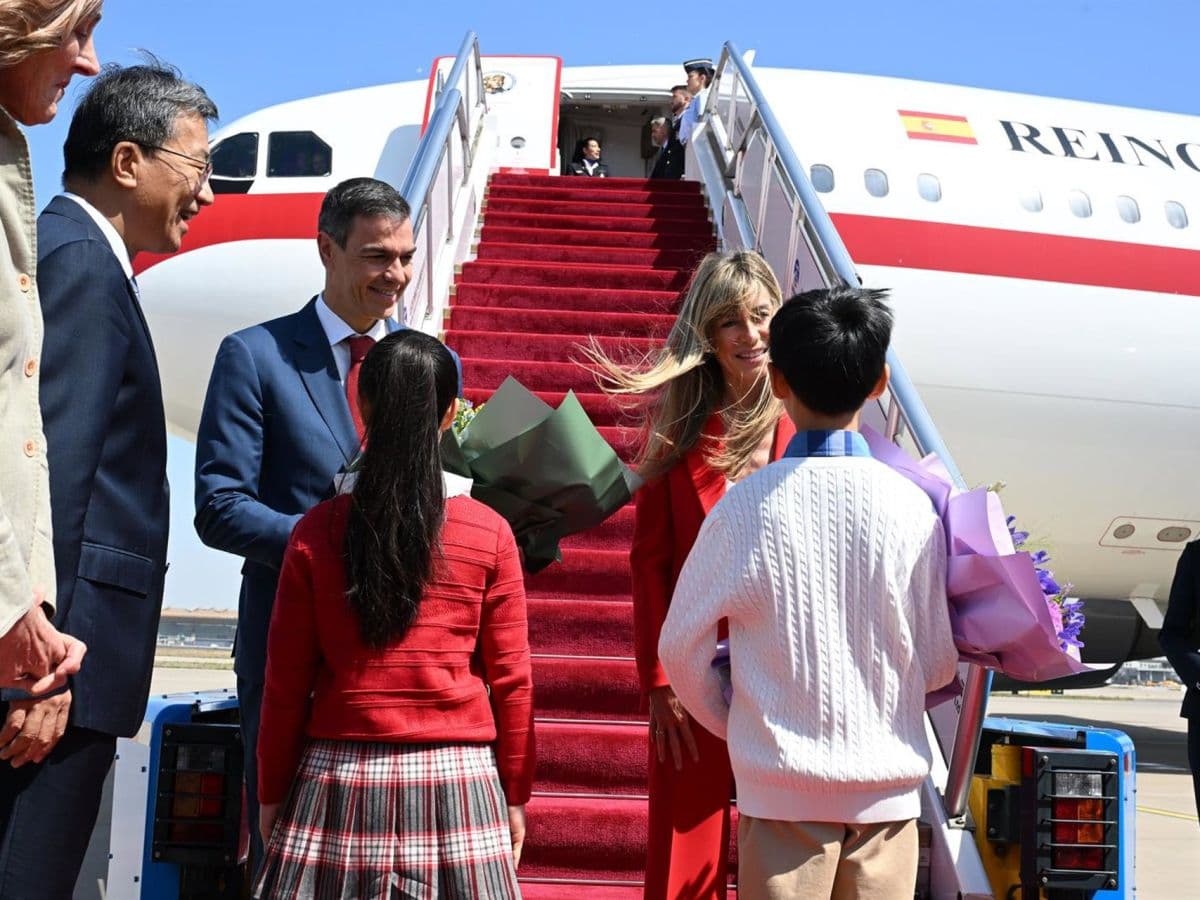
Spanish Prime Minister Pedro Sánchez was in China signing trade agreements when the news of his wife Begoña Gómez being formally charged after a two year corruption investigation, broke at home.
The center-left government led by Sánchez was in Beijing to shore up its relationship there, even as it pivots away from Washington.
A Spanish Judge formally charged Gómez with four offences: influence peddling, corruption in business, embezzlement of public funds, and misappropriation, after closing a two-year investigation.
Politically Motivated? Or Real Corruption?
The case centres on Gómez’s role in securing and managing a post at Madrid’s Complutense University and the alleged use of public resources and personal connections to advance her private interests. The judge’s 39-page ruling described behaviour at the Moncloa palace “that seems more in keeping with that of absolutist regimes.”
The investigation was triggered by Manos Limpias, a self-styled anti-corruption union whose leader was formerly secretary general of the far-right National Front. The current government claims the organisation has a documented history of pursuing politically motivated litigation. That the judge chose to file charges despite the public prosecutor seeking to close the case on multiple occasions is being cited as an example of politically motivated attacks. Gómez in the meantime denies all wrongdoing.
What is not complicated: the political damage is real and accumulating. Sánchez’s brother David is due to be tried next month on separate influence-peddling charges. Sánchez responded from Beijing with studied restraint: “What I ask of the justice system is that it delivers justice. I have nothing more to say.” Read more in the Irish Times
But the data shows, populist or progressive - corruption is what may collapse the house of cards for a government no matter the political leaning.
The V-Dem (Varieties of Democracy) project, which publishes annual measures of the level of democracy worldwide, shows in indices of political corruption, executive corruption and clientelism for Spain there have been increases of 178%, 540% and 80%, respectively, since Sánchez took power in 2018 to 2024. See the data on V-DEM
This is also consistent with the results of Transparency International’s corruption perception index, which gave Spain its worst score (56 points) since 2001 in 2024 (63 points being the series average), placing Spain 46th out of 180 countries. Corruption is a crucial political card that neither the right, nor the left can escape in 2026. See more at Transparency International
That Sánchez was in China, following other European leaders who have in the past months made a beeline to Beijing instead of Washington; and what he said to Xi Jinping, across the table in the Great Hall of the People is the part of this week’s story that the domestic political noise has almost entirely drowned out.
The Bigger Picture: Europe, America, Russia and China
On America: Washington is losing European allies at a pace that has no recent precedent. It backed Orbán and lost. It is now publicly estranged from Meloni, its last ideologically compatible major European leader over a war, a pope, and a Sicilian air base, compounding American isolation across the continent. Leaders across Europe who spent over a year trying to appease Trump are now daring to criticise him, not out of ideology, but because war-related economic pressures are making alignment with Washington a domestic liability. It is now a political cost to be managed.
On Russia: Orbán’s removal is a net loss for Moscow. He was Putin’s most reliable disruptor inside the EU, blocking sanctions, obstructing Ukraine funding, using Hungary’s veto as a geopolitical instrument on Russia’s behalf. Magyar will not replicate that. But the Carnegie Endowment delivers a necessary corrective to the cheering in Brussels: Budapest has relied on Russian energy since the Cold War. Magyar has been unambiguous about what that means in practice: “We will have to sit at the negotiating table with the Russian president. Geography will not change, nor will our energy dependence. If necessary, we will negotiate, but we will not become friends.”
On China: Sánchez’s Beijing visit was reported as a bilateral trade trip. It was structurally something larger. He announced 19 bilateral agreements, launched a formal strategic dialogue with Beijing, and called on China to see Spain and Europe as partners, urging the EU to approach its relationship with China pragmatically. Xi told Sánchez the international order is “crumbling.” Leaders from Britain, Canada, Finland, Vietnam and Ireland had already made the same trip to Beijing this year. The parade of Western capitals heading to Beijing is not coincidental. Countries no longer trust the architect of the rules-based order it has touted for decades.
The incoming government of Europe’s most consequential democratic transition this decade, Hungary, is not closing the door on Beijing either. No European government is. Read more at China.org.cn
Three stories. One week. And the through-line is not ideology. It runs through left, right and center simultaneously.
It is the accelerating cost of assumptions that no longer hold: that Washington anchors the Western alliance (left, right or center). That Russia’s leverage dies with the removal of its most useful European ally. Or that China is a relationship to be managed at careful distance rather than actively courted.
None of those propositions in April of 2026 are intact. Europe’s leaders are navigating with charts that are changing faster than the AI systems they want to invest in.
Getting it right is the harder ask.
The Chief Brief covers the women leaders and geopolitical shifts the mainstream misses - from the geographies that drive the world’s agenda, but don’t yet set it.
If you would like to support our initiative to build a truly inclusive, insight ecosystem for leaders across geographies and sectors: Drop us an email to learn more: newsroom@chiefbrief.org
Experts in geopolitics, economics, technology, and society delivering sharp, concise analysis on the forces shaping our world.
More from The Chief Brief
View All → Conflict Watch
May 7th Broke Two Governments. Only One PM Got the Memo
Latvia’s PM Evika Siliņa resigns, In Britain, Keir Starmer is still in Downing Street. Just about.
 Climate & Environment
Fossil Fuel Exit Club
57 countries met in Colombia to agree on how to phase out oil, gas, and coal. The US, China, Russia, India, and Saudi Arabia were not among them.
 The Macro
IMF Spring Meetings 2026: The $20 Trillion Report Nobody Talked About
The most expensive oversight of the week
 Leadership Briefing
Hungary Votes. Everything Changes.
Meet Anita Orbán: The diplomat who predicted Russia's playbook and is now being asked to dismantle it.

Get the Brief
Sharp analysis and global perspectives delivered to your inbox.
By subscribing, you agree to our Privacy Policy
Subscribe to The Chief Brief
Essential insights on geopolitics, business, AI, and society — delivered daily.
Subscribe to The Chief Brief
Essential insights on geopolitics, business, AI, and society — delivered daily.