May 7th Broke Two Governments. Only One PM Got the Memo
Latvia’s PM Evika Siliņa resigns, In Britain, Keir Starmer is still in Downing Street. Just about.

May 7(th), 2026. A jinxed date for European governments? Probably a stretch. But two political crises triggered on the same day makes you wonder.
But the real question that arises from that date is: When does a leader decide it’s time to go?
Do you read the room and exit?
Or do you hang on by the skin of your teeth till you’re pushed?
That is the tale of two Prime Ministers.
Same week. Very different answers.
Latvia’s PM Evika Siliņa resigns
If you’ve been following the war in Ukraine, you’ll know Latvia. If you can’t find it on a map, you should. An EU and NATO member, this small Baltic country of 2 million people borders Russia and has been punching well above its weight - as one of Ukraine’s most vocal backers, since the war began with Russia in 2022.
Spending almost 5% of GDP on defence it is one of the highest contributors (in pure percentage terms) among NATO members (even as the US arm twists bigger economies to contribute more). It has also supplied thousands of drones, hardware, artillery and training to the Ukrainian armed forces. And it has spent more than a billion euros (about 0.6% of GDP) on civilian, humanitarian, and reconstruction aid to Ukraine.
Latvia is now the second biggest donor to Ukraine (by percentage of GDP), just after Estonia. It has backed this war harder than countries ten times its size. And its coalition government just became one of its casualties.
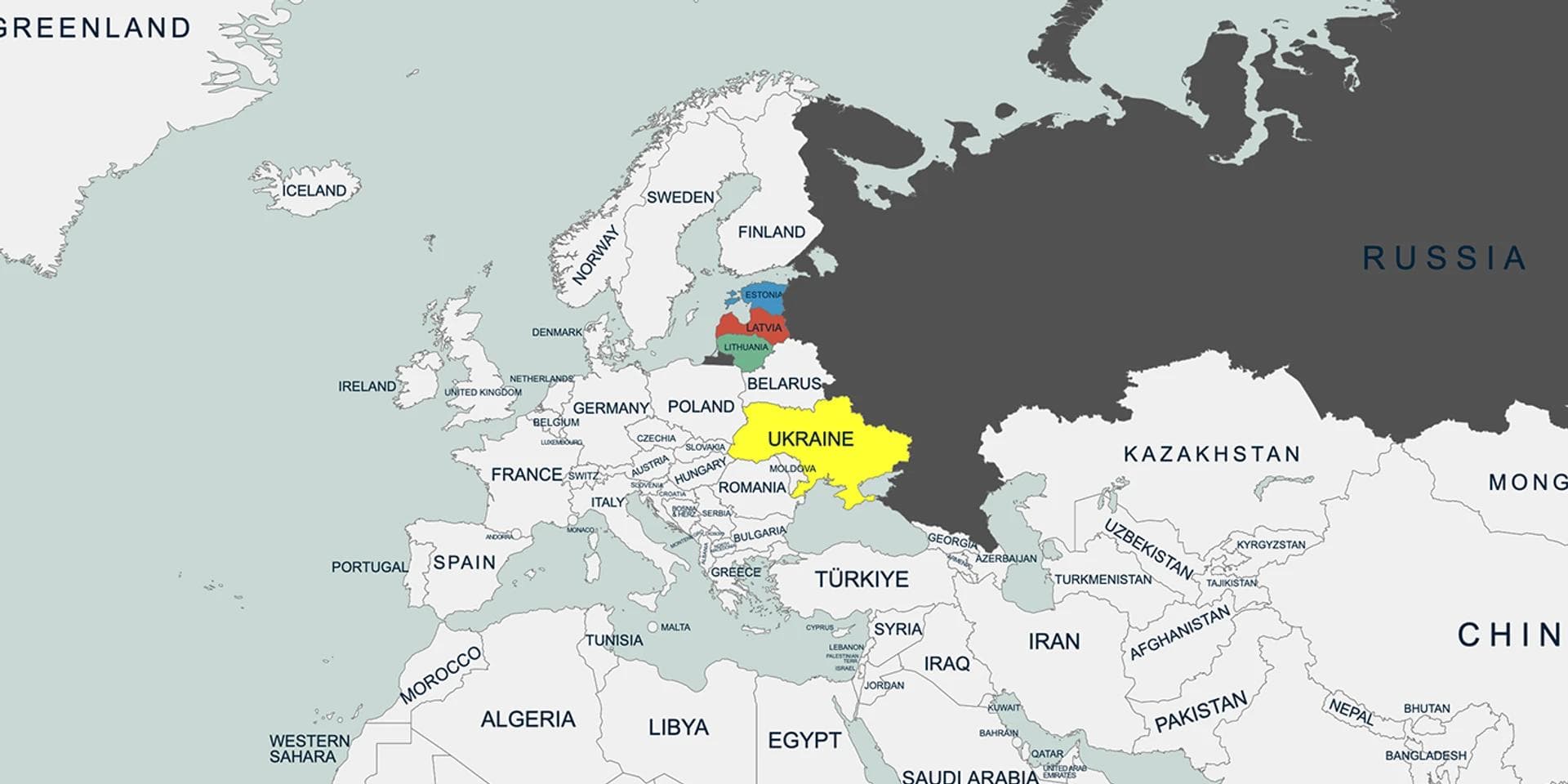
Seven days ago, Ukrainian drones, knocked off course by Russian electronic jamming - crossed into Latvian airspace and hit oil storage facilities in the east of the country. On NATO soil. Four days ago, centre-right Prime Minister Evika Siliņa fired her left-wing coalition partner and Defence Minister, Andris Sprūds. The reason? She said Latvia’s anti-drone systems hadn’t been deployed fast enough. Today, the entire three-party coalition is gone.
“Today, I have made the difficult but honest decision - to step down from the position of Prime Minister,” Siliņa stated in a post on X.
She said the same in a televised address - her priorities have always been Latvia’s security and its people, but “political envy and narrow party interests” had taken precedence over responsibility.
But was this hullabaloo really all about drones? Probably not. Is there blame to go around? Absolutely.
The coalition was already creaking ahead of October’s parliamentary elections. The drones didn’t break this coalition, but they handed everyone involved a decent excuse to bow out.
Sprūds had already been under pressure after previous drone incidents on Latvian territory, and in early April, the Latvian Parliament had even voted on removing him from his post. His flip flops on whether to shoot down stray drones over civilian territory and the instability within his ministry was enough for Parliament to lose confidence.
When the Prime Minister fired Sprūds, she announced his departure was due to a loss of trust - he’d failed to deliver safe skies over the country. The Prime Minister then nominated her advisor and a career military officer Colonel Raivis Melnis, with experience in Ukraine to replace Sprūds.
But Sprūds and the Progressives pushed back. And hard. Sprūds rejected the Prime Minister’s explanation claiming he had already decided to step down. He also accused her of rushing the announcement for political reasons, and of failing to inform him and his party in advance. The Prime Minister’s nomination of an ally to replace him also didn’t sit well with her coalition partners. The Progressives refused to ratify her choice, pulling their 9 votes and ending the coalition’s rule.
And if that wasn’t enough drama in Latvian politics, the country’s Agriculture Minister, Armands Krauze, and leader of the third coalition party, the Union of Greens and Farmers, is being investigated and has been detained by the country’s Corruption Prevention and Combating Bureau (KNAB) on corruption charges. He was fired as Minister for Agriculture, just before the Prime Minister resigned.
Also being investigated - civil servant Raivis Kronbergs, the man who ran Latvia’s State Chancellery (he previously served as State Secretary of the Agriculture Ministry).
The charges are serious: misuse of authority and alleged negligence in the illegal allocation of government aid to companies in the timber sector (timber processing is Latvia’s largest industrial sector). Raids were carried out on their residences and workplaces, and the investigation is being billed by some in the Latvian press as the most high-profile anti-corruption probe in the country’s history.
Latvian President Edgars Rinkevics meets all parliamentary parties on Friday. Whatever comes next must hold together until October. Five months. In Latvia right now, that is not a small ask.
Meanwhile, across the Channel, a very different kind of political crisis is unfolding. One where the PM in question doesn’t seem to have any intention of going anywhere.
The British Prime Minister still hanging on. And the woman who may replace him.

“Who thinks Angela Rayner will be the next Prime Minister, raise your hand.”
That was a cheeky question posed to a room of 300 senior business leaders at a gathering in Manchester a few months ago. Two or three hands went up. Slowly.
Rayner had resigned in September 2025 as Deputy Prime Minister for breach of the ministerial code. The accusation? Unpaid taxes on a property sale. The hesitancy was understandable in the room. Her leftist politics make businesses uncomfortable at the best of times, while the unions on the other hand have always been closer to her than most others in Labour’s leadership.
As she left the building, she said to this journalist - don’t rule her out. Who knows what the future holds.
She might’ve been right.
The British establishment is in uproar. Earlier this month, local elections across England, alongside elections in Scotland and Wales delivered results that were hard to misread by anyone. Perhaps only by British Prime Minister Sir Keir Starmer.
British citizens seem tired of the entrenched two-party system of Labour and the Conservatives. They are voting for anyone else. The right-wing populist Reform party led by Nigel Farage, the Greens, anyone who isn’t a party that has run the country since the financial crisis. The refrain from voters was consistent: We gave them both a chance. They fixed nothing. Time to try something else.
And who can blame citizens. Rising taxes, slowing growth, a cost-of-living crisis that hasn’t shifted and jobs that aren’t coming. When asked, people headed into polling stations said they felt Westminster was too busy creating its own drama to pay attention to what mattered to them. The Peter Mandelson appointment as UK Ambassador to Washington (despite internal flags about his ties to Jeffrey Epstein) was exactly that kind of drama. It was not a good look for a party that had promised change in 2024.
Starmer’s pitch was always stability. A grown-up in the room after the revolving door of Conservative prime ministers. But as it turns out stability without delivery is not enough. It also perhaps explains why only 19% of Brits are on his side.
This week, 87 Labour MPs have publicly called for the Prime Minister to go. So have the unions that fund the party. Starmer spent much of Wednesday, which should have been defined by the King’s Speech (when the government lays out its plans via the monarch), meeting cabinet allies and MPs trying to shore up support. He is understood to have told ministers that a leadership contest would “plunge” the party into “chaos.” He’s still in Downing Street. Just about. Refusing to let go.
Rayner has now announced she had been “exonerated” by the U.K tax authority (HMRC) and has paid off what she owed. Her chess piece is back on the board in what looks like a messy three-way game.
Rayner against her former boss Starmer, and against Health Secretary Wes Streeting, Labour right’s pick, and very much on the other end of the spectrum from Rayner. Streeting resigned today (potentially triggering a leadership race) saying he had “concluded that it would be dishonourable and unprincipled” to continue in his role (give him credit for being honourable in his mutiny).
Then there’s Andy Burnham - Mayor of Manchester, the unions’ favourite (even more perhaps than Rayner), blocked from running for a parliamentary seat and therefore any shot at the leadership. Rayner had backed him and had called blocking him a “mistake.” And Ed Miliband (remember him?), apparently, is also in the race, whenever it kicks off.
Starmer won’t go. Streeting has jumped first but may not have the numbers. Rayner is cleared of wrongdoing but has not actually committed to a run for leadership (yet). Burnham wants in but can’t get through the door. And the British public, meanwhile, are already looking elsewhere.
In this week’s leadership choice dilemma:
In Latvia, Evika Siliņa read the room and walked. In Britain, the question is whether anyone in Westminter has the nerve, or the numbers, to make Starmer do the same. Or will he finally read the room.
Experts in geopolitics, economics, technology, and society delivering sharp, concise analysis on the forces shaping our world.
More from The Chief Brief
View All → Climate & Environment
Fossil Fuel Exit Club
57 countries met in Colombia to agree on how to phase out oil, gas, and coal. The US, China, Russia, India, and Saudi Arabia were not among them.
 The Macro
IMF Spring Meetings 2026: The $20 Trillion Report Nobody Talked About
The most expensive oversight of the week
 Editor's Take
Europe Is Being Rewritten. Here’s What That Actually Looks Like
From Budapest to Rome to Beijing: How Europe’s Political Certainties Collapsed in One Week
 Leadership Briefing
Hungary Votes. Everything Changes.
Meet Anita Orbán: The diplomat who predicted Russia's playbook and is now being asked to dismantle it.

Get the Brief
Sharp analysis and global perspectives delivered to your inbox.
By subscribing, you agree to our Privacy Policy
Subscribe to The Chief Brief
Essential insights on geopolitics, business, AI, and society — delivered daily.
Subscribe to The Chief Brief
Essential insights on geopolitics, business, AI, and society — delivered daily.