
World Environment Day (week!?) just got a whole lot sharper.
🥁We’re thrilled to welcome Jessica Jurkschat to The Chief Brief team!
She’s not just a journalist — she’s a force of nature (pun totally intended). With a global eye and a sharp pen, Jessica dives deep into the intersections of climate, policy, power, and money. bringing you stories that cut through the noise.
You’ll spot her bylines across our coverage — with the rigour, edge, and curiosity we’re proud to call ours.
Welcome aboard, Jessica! We’re all better for it.
Now, on with the Brief - World Environment Day (June 5th) just passed, and with COP30 in Brazil, the spotlight’s on the home of the Amazon to lead - as wealthier nations fumble, stall, or quietly retreat from climate commitments.
Brazil’s Climate Crossroads
—By Jessica Jurkschat
Brazil’s Environment Minister Marina Silva calls it a “death blow.” She’s talking about Bill 2159/2021—legislation critics have dubbed the “devastation bill.” Passed by Brazil’s Senate just a fortnight ago, the bill threatens to undo decades of hard-won environmental protections. For Silva, a longtime environmental advocate and global climate voice, the threat isn’t abstract—it’s immediate, sweeping, and deeply personal.
While some argue that the proposal’s core objective is to unify and simplify the rules for issuing environmental licenses, the bill guts Brazil’s environmental licensing framework and sidesteps crucial environmental safeguards. In short: it’s a fast-track to environmental destruction.
Among its most contentious points:
- It introduces “self-declared licenses,” allowing developers to greenlight their own projects without prior environmental assessment.
- It eliminates automatic federal checks for projects that impact Indigenous lands and endangered ecosystems.
- And it removes the right of Indigenous and Quilombola communities to be consulted if their land hasn’t been officially recognised—shutting out people whose claims have been delayed for years.
Critics say it’s the most significant rollback of environmental policy in Brazil in 40 years.
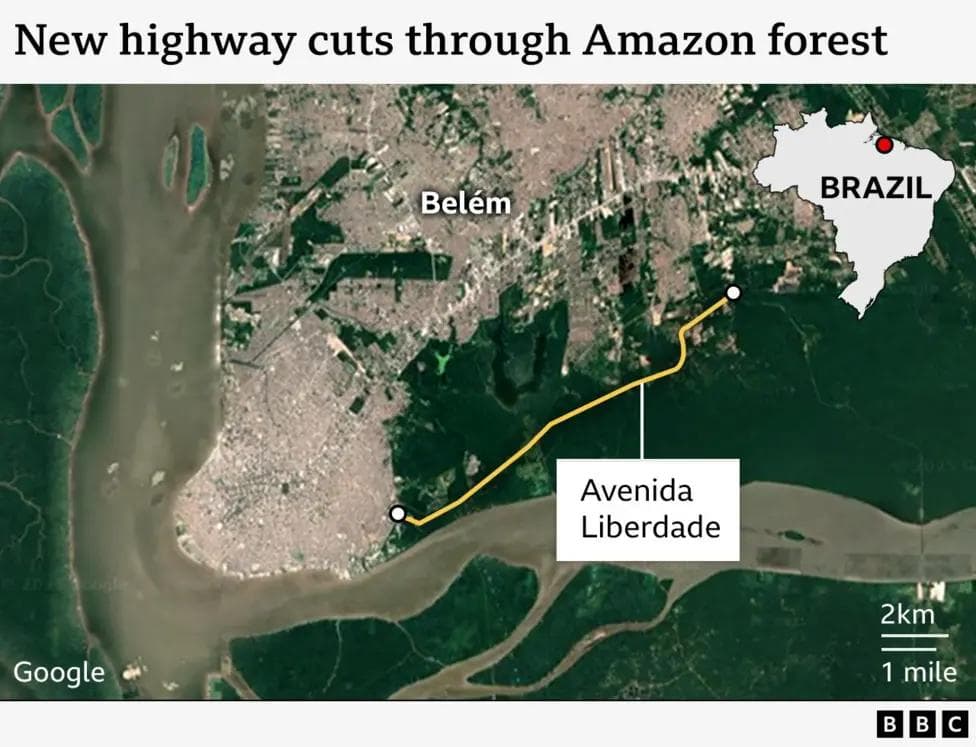
And the irony? Later this year, Brazil will host COP30 in Belém—a city nestled on the edge of the Amazon, and the Earthshot Prize in Rio de Janeiro, the climate initiative backed by Prince William which celebrates scalable environmental solutions. Two major events, in two iconic cities, that will bring climate negotiators to the frontline of deforestation.
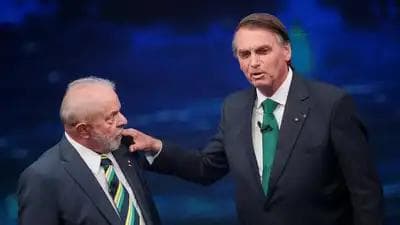
President Luiz Inácio Lula da Silva has pledged to achieve zero deforestation by 2030, following years of soaring deforestation under his predecessor, the controversial right-wing leader Jair Bolsonaro. But as Lula champions climate action abroad, his administration faces pressure at home from powerful agribusiness and mining blocs that dominate Brazil’s lower house.
When it comes to solving climate change, all eyes should be on Brazil. Not just for its samba rhythms or world-class footballers, but because within its borders lies one of the planet’s most powerful carbon sinks: the Amazon Rainforest. Covering more than 60% of Brazil’s landmass, the Amazon is often called the "lungs of the Earth." But right now, it’s wheezing.
The Amazon doesn’t just affect Brazil—it regulates rainfall patterns across South America, stores an estimated 150-200 billion tons of carbon and is home to 10% of the world’s known species. But it’s nearing an irreversible tipping point. The rainforest stores the equivalent of almost two years of global carbon emissions, but its role as a carbon sink is under threat, according to a study by U.S. nonprofit Amazon Conservation using satellite data provided by the Planet company.
Crucially - if deforestation passes a certain threshold, parts of the Amazon could shift from lush forest to dry savannah, unleashing massive carbon emissions and accelerating global warming.
Thanks for reading The Chief Brief! Enjoying the read? Please share it.
The irony is, we already know who has the answers in this fight against climate change. We just haven’t cared enough to listen.
Indigenous communities have protected the Amazon for millenia. Their stewardship is rooted in lived knowledge of the forest and their lands experience far lower deforestation rates than surrounding areas—often five times lower. Indigenous communities are the protectors of more than 80% of the world’s remaining biodiversity.
It is time we start prioritising their voices.
At COP30 and beyond, Brazil has a chance to embrace a different narrative. It's not enough to host climate summits, if the rainforest is being bulldozed to make space for four lane highways to lead to the venue.
Brazilian Indigenous leaders to follow:
Txai Surui
Txai Suruí first made headlines during COP26, where she got a standing ovation from world leaders after speaking about Brazil’s deforestation. Now, she leads the youth movement of the Kanindé Ethno-Environmental Defense Association, continuing her family’s legacy of resistance and conservation.
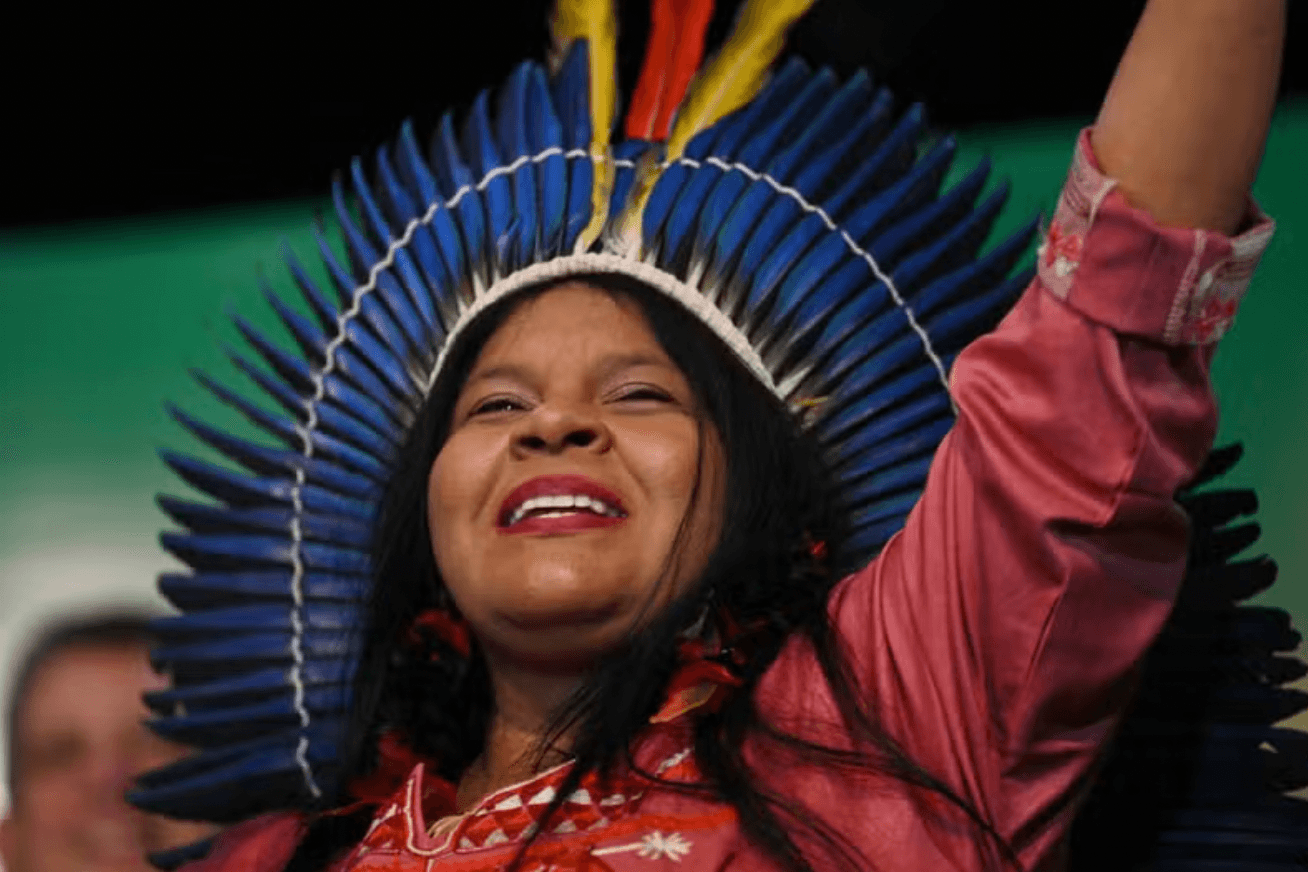
Now serving as the country’s first-ever Minister of Indigenous Peoples, Sônia Guajajara hails from the Guajajara territory in Maranhão. She’s spent decades confronting state neglect, corporate exploitation, and systemic racism and her rise from activist to cabinet minister marks a historic turning point for Indigenous leadership in government.
Célia Xakriabá
Célia Xakriabá is an educator, activist, and federal deputy from the Xakriabá people in Brazil. She works at the intersection of Indigenous knowledge, feminism, and political advocacy. Célia is dedicated to promoting Indigenous education and defending ancestral lands through both grassroots organising and legislative work.
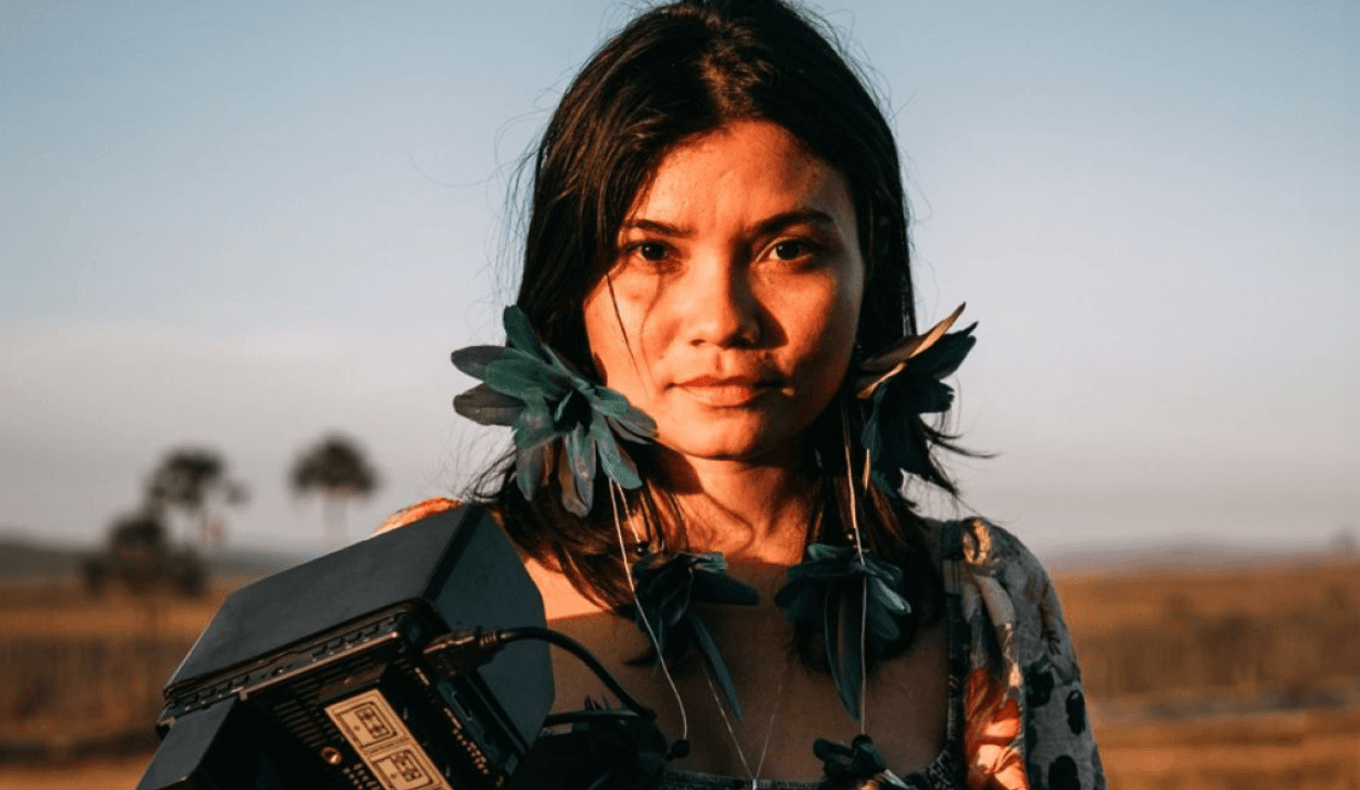
As a filmmaker and activist, Priscila Tapajowara is using digital storytelling to document life on the frontlines of the Amazon. A member of the Tapajó people, her work captures both the beauty and the brutal reality of Indigenous resistance—often from inside the communities most under threat.
Alessandra Korap
Alessandra Korap is a leader of the Munduruku people and a fierce advocate for protecting the Amazon rainforest. She has confronted illegal mining and deforestation in her territory, often at great personal risk. Her efforts have gained international recognition, highlighting the vital role of Indigenous women in environmental defense.
Movers and Shakers
Five Women Scientists Win Global L’Oréal–UNESCO Awards
From cryptography to pollution detection, these winners are advancing science across continents.
“Since its creation (1998), the L’Oréal–UNESCO For Women in Science programme has honoured more than 4,400 women for the excellence of their research, including 132 laureates of the International Awards and more than 4,000 young female researchers. Among the laureates, 7 have received a Nobel Prize in science.” - UNESCO
🇺🇸 Barbara Finlayson-Pitts (University of California, Irvine)
North America – For foundational research into how air pollution forms.
🇿🇦 Priscilla Baker (University of Cape Town)
Africa & Arab World – For developing sensors that detect environmental pollutants.
🇨🇳 Xiaoyun Wang (Tsinghua University)
Asia-Pacific – For revolutionising cryptography behind modern digital security.
🇩🇪 Claudia Felser (Max Planck Institute for Chemical Physics of Solids)
Europe – For discovering magnetic materials with green energy potential.
🇦🇷 María Teresa Dova (Universidad Nacional de La Plata)
Latin America & Caribbean – For reshaping understanding of high-energy physics.
& In Job Moves
🇬🇧 Andrea Melville has been appointed CEO of The Co-operative Bank as its first female chief. She will also serve as group chief commercial officer at Coventry Building Society, overseeing trading and integration. In January, Coventry Building Society announced it had completed its acquisition of the Co-operative Bank for £780m in cash.
🇺🇬 Patricia Ojangole, Managing Director of Uganda Development Bank, has been appointed Chair of the Association of African Development Finance Institutions (AADFI), confirmed during its 50th anniversary celebrations.
🇺🇸 Mandy Walker has made history as the first woman to lead the American Society of Cinematographers, breaking a long-standing gender barrier in Hollywood. Her election marks a slow but significant shift towards inclusion behind the camera.
🇺🇸 Cristine Betters has been named CEO and President of MCD Global Health, effective 1 July.
🇲🇽 🇺🇸 Ronald Day has been appointed CEO of the Miss Universe Organization. Based in New York and Mexico City, he will oversee strategy and operations across Western markets, working with national directors, sponsors and strategic partners. Formerly President of Entertainment and Chief Content Officer at Telemundo, Day led production of live specials including the Miss Universe pageant.
Experts in geopolitics, economics, technology, and society delivering sharp, concise analysis on the forces shaping our world.
More from The Chief Brief
View All → Conflict Watch
May 7th Broke Two Governments. Only One PM Got the Memo
Latvia’s PM Evika Siliņa resigns, In Britain, Keir Starmer is still in Downing Street. Just about.
 Climate & Environment
Fossil Fuel Exit Club
57 countries met in Colombia to agree on how to phase out oil, gas, and coal. The US, China, Russia, India, and Saudi Arabia were not among them.
 The Macro
IMF Spring Meetings 2026: The $20 Trillion Report Nobody Talked About
The most expensive oversight of the week
 Editor's Take
Europe Is Being Rewritten. Here’s What That Actually Looks Like
From Budapest to Rome to Beijing: How Europe’s Political Certainties Collapsed in One Week

Get the Brief
Sharp analysis and global perspectives delivered to your inbox.
By subscribing, you agree to our Privacy Policy
Subscribe to The Chief Brief
Essential insights on geopolitics, business, AI, and society — delivered daily.
Subscribe to The Chief Brief
Essential insights on geopolitics, business, AI, and society — delivered daily.