Madame President, Meet the Strait of Hormuz
Epic Fury in Iran & The Middle East

The 30-Second Brief
• The United States and Israel have launched major strikes against Iran, triggering retaliation across the Gulf and the reported death of Supreme Leader Ali Khamenei.
• The Strait of Hormuz: the artery carrying roughly one-fifth of global oil supply is now effectively closed, stranding tankers and sending energy prices soaring.
• Markets, airlines and governments are bracing for the economic consequences of a conflict that risks spreading across the Middle East and beyond.
In other words: the world’s most important energy chokepoint has just become a battlefield.
Madame President
It turns out you do not need to have been elected head of state to preside over the UN Security Council.
You simply have to be married to one.
That was the surreal image the world received this week: Melania Trump banging the gavel to open an emergency UN Security Council meeting while airlines grappled with their worst crisis since Covid, governments scrambled to avoid being dragged into a regional war, markets braced for an economic shock, and rulers across the Middle East tried to figure out how to protect their citizens from the hellfire raining down on them.
Late-night host Jimmy Kimmel summed it up rather neatly:
“This is the first time ever that a first lady has presided over a Security Council meeting less than 72 hours after her husband started a war.”
Diplomatic history will file that under unusual precedents.
The War, The Memes, The Reality
When the United States and Israel launched Operation Epic Fury and Operation Roaring Lion on 28 February 2026, the internet responded in the only language it truly understands.
Memes.
Specifically, jokes about teenagers naming military operations as if they were playing Call of Duty.
Then the airspaces began closing.
Cities, US bases and energy infrastructure across the Gulf came under retaliatory strikes from Iran. Shipping routes were thrown into chaos. Energy markets began doing what energy markets do when one-fifth of global supply suddenly looks uncertain.
The jokes stopped fairly quickly.
In the days since the reported death of Supreme Leader Ali Khamenei, along with senior figures in the Islamic Revolutionary Guard Corps (IRGC), Iran’s Assembly of Experts is reportedly under pressure from the IRGC to appoint his son, Mojtaba Khamenei, as the next Supreme Leader. (Who is Mojtaba? Read More at Reuters)
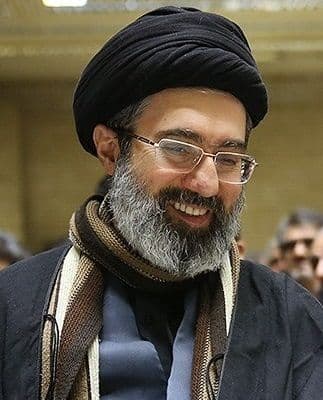
Meanwhile, US and Israeli strikes continue and Iran’s retaliatory attacks across the region show little sign of slowing.
The Real Battlefield: Energy
The immediate pressure point is the Strait of Hormuz.
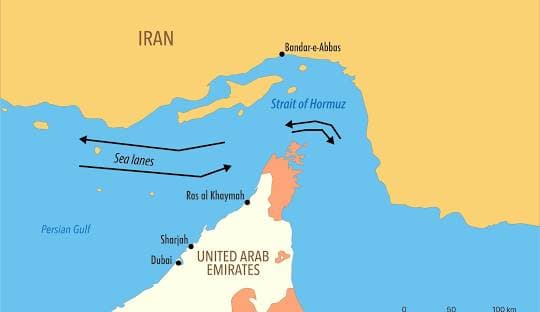
The waterway stretches 167 km, narrowing to a 39 km chokepoint, and carries roughly one-fifth of the world’s oil and gas supply.
It is now effectively closed.
Around 200 crude and product tankers are stranded while the IRGC warns that any vessel attempting to pass through the Strait risks being targeted.
According to Lloyd’s List Intelligence data, most ships are currently anchored while owners and charterers wait to see whether the world’s most important energy corridor has suddenly become a war zone. Read more at Lloyds List
South Korea’s tankers appear to be the most affected in the Strait, while China has the largest exposure in terms of vessel capacity in the Gulf.
Energy markets reacted immediately.
Oil and gas prices surged. Asian currencies weakened against the dollar. South Korea’s Kospi index fell to levels not seen since the global financial crisis, while markets in Thailand, Japan, Indonesia and Taiwan also dropped sharply.
If this conflict becomes prolonged, the risk of an inflationary global recession is no longer theoretical.
China’s Quiet Problem
HSBC analysts note that disruptions to Iranian oil exports will primarily affect China, which purchased roughly 80 per cent of Iran’s oil exports.
If those supplies vanish, China will have to divert purchases elsewhere, potentially to Russia, though analysts believe that will not fully compensate for the shortfall.
Reports have suggested that China has instructed its refiners to halt diesel and petrol exports. Read more at Bloomberg
Officially, Beijing denies this.
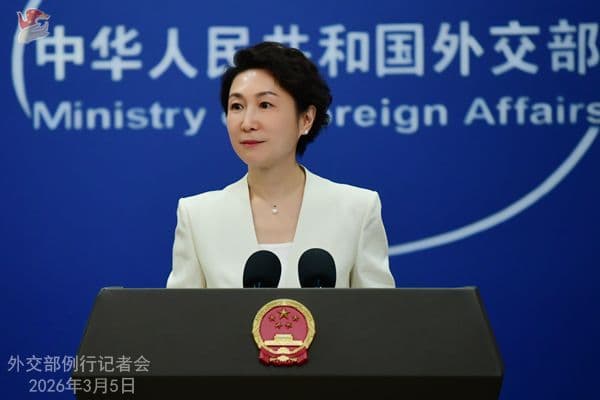
Foreign Ministry spokesperson Mao Ning said she was unaware of any such directive and instead reiterated China’s diplomatic position:
“The protraction and escalation of the conflict serves no one’s interest. China believes that war and force cannot solve issues once and for all.”
China will soon dispatch Zhai Jun, its Middle East envoy, to the region to help de-escalate tensions. Read more at Foreign Ministry of China
Translation: Beijing would quite like the world’s energy arteries to reopen and stay open.
The Interest Rate Domino
Energy shocks have a habit of travelling quickly through the global economy.
Nomura analysts warn that rising crude and natural gas prices will push up the European Central Bank’s inflation forecasts.
In India, the falling rupee has not yet forced the Reserve Bank of India to shift its low interest-rate stance. But a prolonged war would affect the country on multiple fronts: higher energy import costs, supply chain disruptions, weaker consumer sentiment and possible interruptions to remittances from Gulf workers.
Much of South-East Asia faces the same challenge.
Shipping routes may also begin shifting. Cargo destined for Europe and the United States may now need to travel around the Cape of Good Hope, adding 15 to 20 days to journeys.
Longer routes mean higher freight and insurance costs.
Higher freight and insurance costs mean higher consumer prices.
War has always been excellent at exporting inflation.
The Diplomatic Scramble
The global response so far has been defined by a sharp contrast.
Defensive military action on one side. A frantic search for a diplomatic off-ramp on the other.
How that off-ramp might appear remains a multi-trillion-dollar question.
US President Donald Trump has insisted he will not negotiate with Iran’s regime. He has also threatened punitive economic action against Spain after it refused to allow US aircraft to use Spanish bases.
Meanwhile Israel has intensified attacks on Iran and Lebanon, where the IRGC-backed Hezbollah operates.
The conflict, in other words, is widening rather than narrowing.
The War’s Expanding Geography
The disinformation campaigns online risks expanding this conflict as much as the missiles flying overhead and hitting targets in Kuwait, Oman, Saudi, Bahrain, UAE, Lebanon etc. Reports of an attack on Tajikistan by Iran for example were disproved as old pictures of a restaurant fire.
Another example? The direction of missiles and therefore false flag ops Vs. real attacks on Dubai being debated nauseam.
But verified attacks continue too.
At one point a missile aimed at Turkey was intercepted.
The Pentagon said the missile originated from Iran but confirmed that the incident would not trigger NATO’s Article 5. Iran has denied launching it. (Turkey is a NATO member)
This has left analysts, diplomats and the internet attempting to determine who actually did.
Speculation on the Operation’s end game has also intensified with comments from former Israeli Prime Minister Naftali Bennett, telling a group of American businessmen that Turkey (in his opinion) was the next Iran. This, coupled with reports that Prime Minister Benjamin Netanyahu has warned about Egypt’s military build-up during a closed-door meeting in the Israeli Knesset.
It seems the list of potential flashpoints continues to grow.
Women Managing the Fallout
While Washington and Tel Aviv pursue a military campaign aimed at dismantling Iran’s nuclear and military infrastructure, several female leaders across Europe and beyond are navigating a more cautious diplomatic path.
Ursula von der Leyen, President of the European Commission, was the first European leader to respond publicly, describing developments in Iran as “greatly concerning”. She has since held talks with multiple European and Gulf leaders and called for a “credible transition” in Iran.
Critics say she is once again (having done so with Ukraine and Gaza previously) overstepping her mandate and sidelining others (Kaja Kallas whose mandate it is) by doing so. An accusation being levelled at von der Leyen? That she is promoting a position aligned with the US and Israel but not formally endorsed by the EU’s 27 member states.
Kaja Kallas, the EU’s foreign policy chief, has described the situation as “perilous”. While condemning Iran’s regime, she has warned that the current offensive risks triggering a wider regional escalation. In the meantime, she has also placed the EU’s Aspides naval mission in the Red Sea on high alert to keep maritime corridors open.
Yvette Cooper, the UK Foreign Secretary, told the House of Commons this week that Britain was deliberately not involved in the initial strikes. The UK’s role, she said, is limited to defensive actions such as intercepting missiles and drones to protect British personnel and allies.
Michelle O’Neill, Northern Ireland’s First Minister, has chosen not to attend UK national security briefings on the matter, and defended her decision arguing that it would be “absolutely the wrong call” for Britain to join the war.
Giorgia Meloni, Italy’s Prime Minister, has convened high-level meetings to assess the conflict’s “geo-economic risk”. While criticising Iran’s retaliatory strikes on Gulf states, she also noted that the US and Israel launched their attacks without consulting European partners.
Mette Frederiksen, Denmark’s Prime Minister, has allocated an additional €510 million for energy support and infrastructure in 2026, arguing that Europe must secure its own energy future if it is to avoid becoming a pawn in global power struggles.
Claudia Sheinbaum, President of Mexico, reaffirmed the country’s commitment to non-intervention, criticising the use of force by the US and Israel and reiterated, Mexico’s foreign policy remains guided by constitutional principles.
Samia Suluhu Hassan, President of Tanzania, has already felt the economic ripple effects. Fuel prices in the country have risen by 13 per cent, prompting her to strengthen strategic reserves while advancing a $42 billion LNG project in Dar es Salaam to cater to Europe and other parts of the world currently dependent on the Strait of Hormuz.
Energy security, it seems, now has a very long queue of interested governments.
Thanks for reading! This post is public so feel free to share it.
Aviation Enters Crisis Mode
The aviation industry has moved rapidly into crisis management.
Marjan Rintel, CEO of KLM, oversaw the immediate suspension of regional routes and warned that rerouting flights around the conflict will significantly increase flight times and fuel costs.
Vanessa Hudson, CEO of Qantas, warned that the closure of traditional Middle Eastern flight corridors has created a global aviation bottleneck.
On the military front, the Israeli Defence Forces confirmed that approximately 30 female pilots and navigators participated in the strikes against Iran.
Meanwhile, a US female pilot went viral after surviving a friendly-fire incident in which her F-15E was downed over the Kuwaiti desert.
War produces strange headlines.
The Moral Question
Iran’s women footballers refused to sing their national anthem before an Asia Cup match this week. It was their quiet act of dissent against the regime.
The debate that followed has been uncomfortable.
Much of it has centred on the legality of the war and the relative silence of parts of the international feminist movement.
The Chief Brief has consistently supported Iranian women in their struggle against the regime’s gender apartheid.
At the same time, it is also our editorial position that acts of aggression, occupation or war, regardless of the moral or security justification offered, violate international law.
Morality and legality must apply equally, regardless of who is making the argument.
It is possible to hold two thoughts at once.
The people of Iran deserve the tools to bring about the change they want to see in their own country. History provides ample evidence that occupation, forced regime change and aerial bombardment rarely produce the outcomes their architects promise.
Afghanistan and Iraq remain recent reminders.
What To Watch Next
Three developments will determine whether this crisis stabilises or escalates.
1. The Strait of Hormuz
The single most important variable is whether shipping resumes.
If tankers remain stranded, the world is looking at sustained energy price shocks and inflation that central banks will struggle to control.
2. Iran’s Leadership Transition
The reported death of Ali Khamenei has created a moment of extraordinary uncertainty inside Iran. If the IRGC succeeds in pushing through the appointment of Mojtaba Khamenei, it will signal that the military establishment is consolidating control.
That rarely makes de-escalation easier.
3. Whether the War Spreads
The intercepted missile targeting Turkey and rising tensions involving Lebanon, Egypt and the Gulf show how quickly regional conflicts can widen.
The Middle East has seen many crises. Few, however, begin with the closure of the world’s most important oil corridor.
Experts in geopolitics, economics, technology, and society delivering sharp, concise analysis on the forces shaping our world.
More from The Chief Brief
View All → Conflict Watch
May 7th Broke Two Governments. Only One PM Got the Memo
Latvia’s PM Evika Siliņa resigns, In Britain, Keir Starmer is still in Downing Street. Just about.
 Climate & Environment
Fossil Fuel Exit Club
57 countries met in Colombia to agree on how to phase out oil, gas, and coal. The US, China, Russia, India, and Saudi Arabia were not among them.
 The Macro
IMF Spring Meetings 2026: The $20 Trillion Report Nobody Talked About
The most expensive oversight of the week
 Editor's Take
Europe Is Being Rewritten. Here’s What That Actually Looks Like
From Budapest to Rome to Beijing: How Europe’s Political Certainties Collapsed in One Week

Get the Brief
Sharp analysis and global perspectives delivered to your inbox.
By subscribing, you agree to our Privacy Policy
Subscribe to The Chief Brief
Essential insights on geopolitics, business, AI, and society — delivered daily.
Subscribe to The Chief Brief
Essential insights on geopolitics, business, AI, and society — delivered daily.