New York, New York
Clash of the Headlines: UNGA Drama Meets Keep Calm & Carry On

Private thoughts
New York, UNGA (UN General Assembly) week, Climate Week. Usually chaotic. The week every New Yorker hates for all its road-blocks and diversions. (Paul Krugman calls it a hellscape.) The city’s gridlocked, streets clogged with diplomats, and everyone’s pretending the world isn’t quietly burning. French President Emmanuel Macron went viral just trying to negotiate his way past roadblocks.
For the first time in my life, I actually thought about what I should look like just to walk the streets of the city I once called home in my twenties. Dress down and risk being mistaken (by potentially roaming ICE officials) for an illegal immigrant? Or turn up sharp, with jewellery I never crack open, just to get past the border guards of perception? I went with the latter. Call it curiosity, call it self-preservation. (I didn’t take the advice to carry a burner phone. What’s life after all, without a little risk?)
My burning curiosity was whether the world was truly drained of empathy? Or was all the noise, just noise? What I found was partly predictable, partly a relief.
The Analysis
America, chaotic as ever.
The Americans I met fell into three neat camps: horrified, cautiously carrying on without creating ripples, or openly supportive of the Administration. The overarching theme of every conversation with an American in New York? Jimmy Kimmel and their take on the First Amendment.
Caution is running deep in the United States. There were half-jokes at Chatham House rules events about what if someone was wearing a wire. Jokes that masked unease floating in the air.
Then there was US President Donald Trump. An almost an hour-long ramble (he had been given 15 minutes) included Islamophobic barbs against the London Mayor and climate denial in full force:
“Climate change is the greatest con job ever perpetrated on the world.”
He warned America’s European allies, they should abandon these “green scams” if they want their economies to succeed.
All that, after a rant about a stopped escalator and a non-functioning teleprompter. Both, UN investigations later revealed, were caused by his own staff, which the President is hotly contesting. Then there is the American crackdown on “DEI”. It resulted in very few UNGA/Climate Week side events putting women or minorities centre stage. I expected the same inside the UN. I was surprised.
The rest of the world? ‘Keep Calm & Carry On’
From Africa and Asia to Europe and Latin America, while leaders might have been wary of the US stance, especially post-Trump, but there was a quiet air of determination: if we have to move forward without the US, we will.
China for the first time committed to reducing Greenhouse gases by 7-10% by 2035.
Katharine Hayhoe, chief scientist at The Nature Conservancy, cut straight to the point in an interview with Newsweek this week:
“The real objection people have is not to the science…They don’t want to fix it because it stands in the way of the accumulated power and wealth of some of the most influential people in the world.”(Here is her view on how to actually tell the story of climate change so people will listen)
UN Secretary-General António Guterres highlighted the global impact of American policy and tech-fuelled misogyny:
“A wave of misogyny is rolling across the world,” he warned, on the 30th anniversary of the Beijing Declaration (anyone remember how hard that was to achieve?)
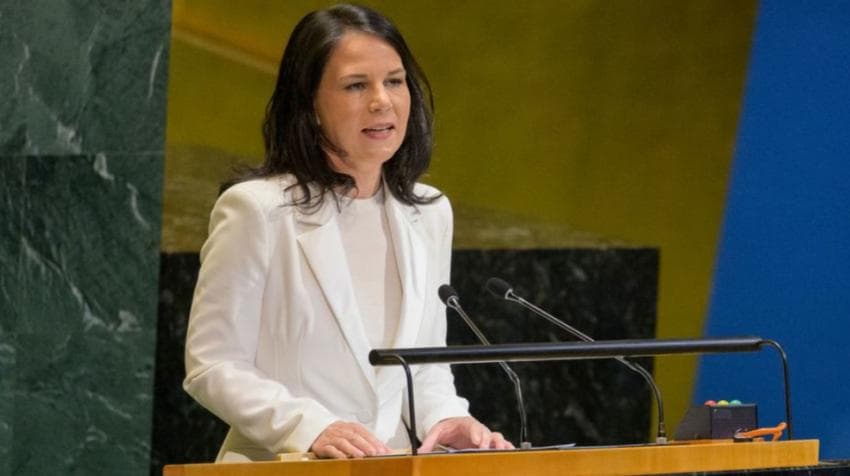
Meanwhile, women leaders at UNGA reminded the room what’s at stake. Annalena Baerbock, the 5th woman to preside over UNGA in its 80-year history (and former German Foreign Minister), was clear:
“For so many of us here, we hold positions that when we were young seemed unattainable, but are now almost normal for the next generation.”
UN Women Executive Director Sima Bahous pointed to progress: the number of women in parliaments around the world has nearly doubled and almost 100 discriminatory laws have been reversed in the past 5 years.
Nobel Laureate Nadia Murad was blunt:
“The next generation of women and girls deserve to inherit no more promises but the reality of justice, equality and dignity.”
The spotlight - Our Young. They are wiser than you think.
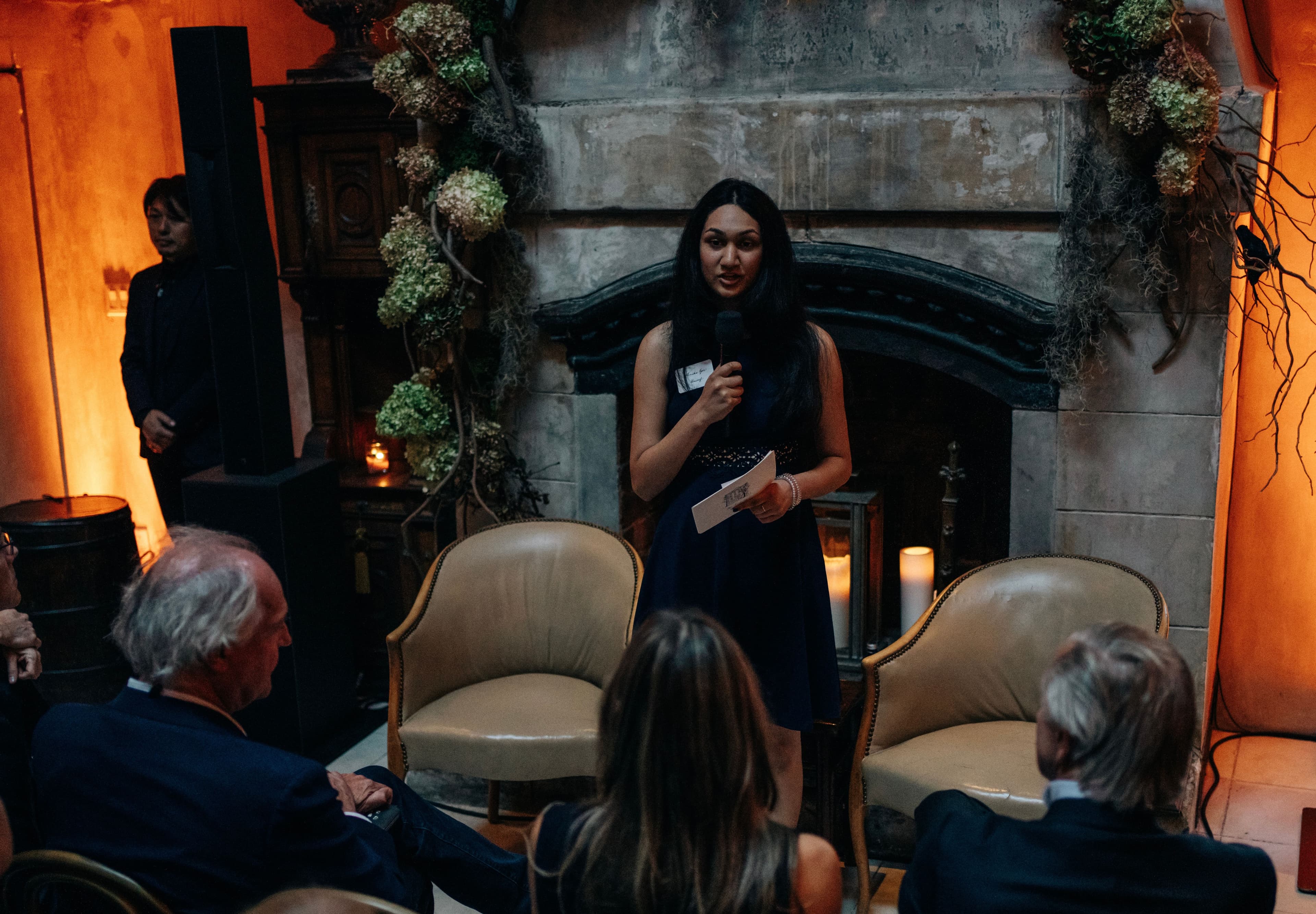
At one closed-door event, “An Evening of Impact” hosted by Adyen and UNICEF, despite the room being full of the world’s most powerful C-suiters and celebrity-status global leaders, the limelight was stolen by Anika Iyer, Senior Leader on UNICEF USA’s National Youth Council. Her perspective left the room thinking: crises don’t always happen far away, or in under developed countries. They sometimes are right next door to us. So how do we do good, better?
Anika’s only 18 and has already spent years as a tireless advocate for child rights, gender equality, and equitable access to education in the U.S. She has served as a champion trainer for UNICEF’s Youth Advocacy Guide, working with youth nationwide on advocacy plans, and has presented child rights workshops in schools.
Anika’s advocacy began with lobbying for the successful ban on child marriage in the U.S. state of Michigan. A problem, one CEO in the room admitted, (he owns a home in the state) he wasn’t even aware of.
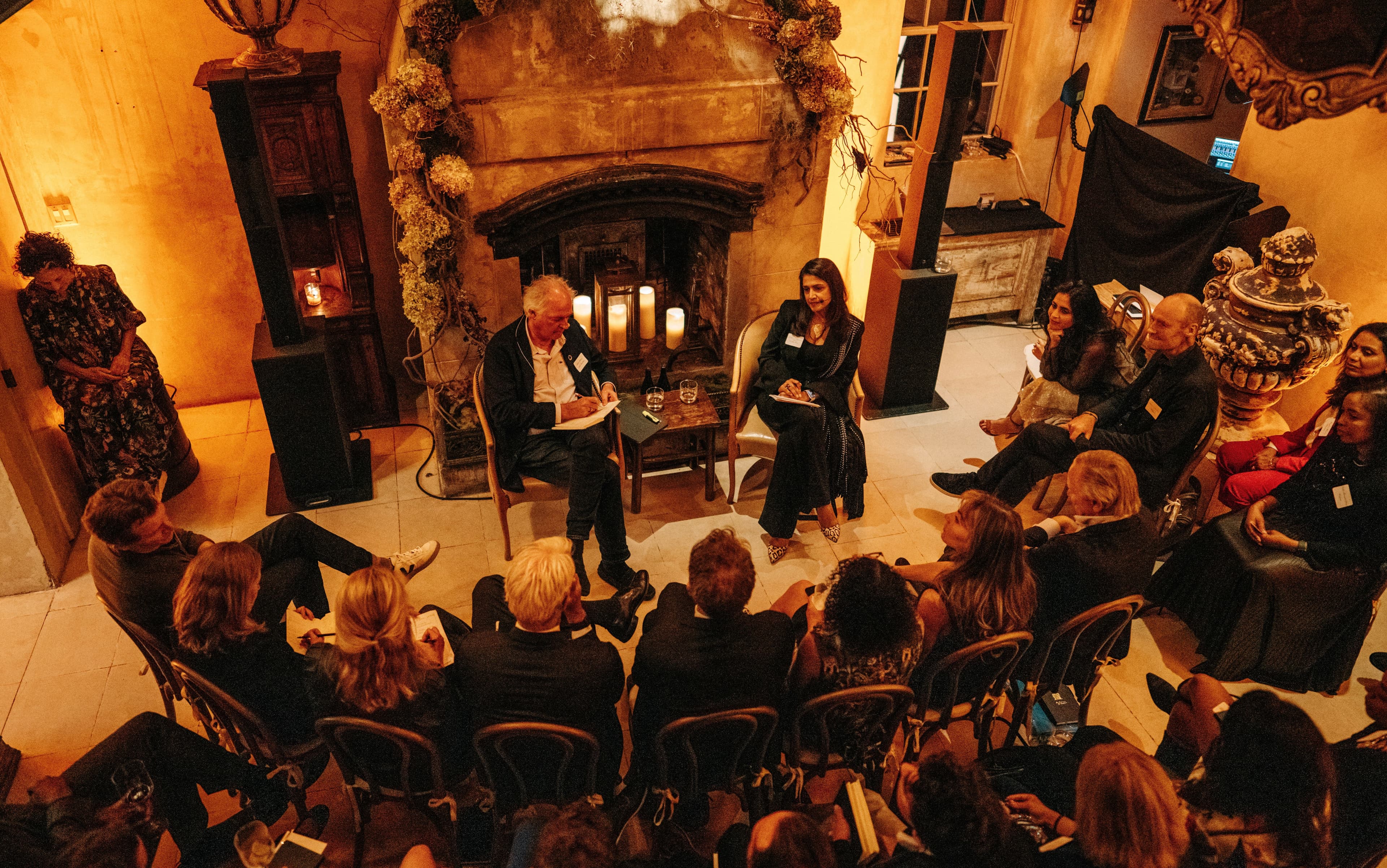
Leaders driving that home their in own organisations know that truth, of ‘issues being closer than we think,’ well. Women like Dominique Simons, Head of Impact and Brooke Nayden, CHRO at Adyen. Or Chelsea Mozen, Sustainability Lead at Etsy. Those driving money into powerful innovations like Prajna Khanna, Chief Sustainability Officer at Prosus Group and those bringing business leaders, policy makers and the NGO world together like Kitty van der Heijden Assistant Secretary-General at UNICEF or HRH Princess Mabel of Oranje-Nassau who prefers to go by just, Mabel.
Together , the powerful, the experienced, and the influential in the room were unanimous - Anika’s presence, words and poise had struck deep and reminded them, that sometimes the loudest wisdom comes from those we least expect.
Empathy and kindness? Not dead.
My relief came from the realisation through the week that from the C-suite to nonprofits, people are still willing to put money and energy into what they believe is the greater good. The quiet message roaming UNGA/Climate Week’s events was simple: investments continue, and must continue. Jane Goodall and her institute’s Executive Director Anna Rathmann drove that point home as they spread the word.
It would be near impossible to roll-back decades and millions (if not billions) in investments. But the growing challenge was deeply felt as well. Corporates and Non-Profits are wrestling with questions that have no easy answers:
- How do you manage employees with polarised political views, without alienating half your workforce?
- How do you continue social impact work when investors, consumers, and clients are scrutinising every move for political risk?
- How do you fundraise for NGOs when traditional government aid models are collapsing and public trust is tanking?
- How do you keep long-term programs alive when buzzwords like CSR, DEI, and ESG are politically charged—or declared “dead”? (“CSR is dead. Just like DEI and ESG,” one executive told me this week. “That doesn’t mean we don’t believe in doing good.”)
- And importantly, how do we use AI to help, rather than exacerbate divisions and inequalities?
Executives are recalibrating. Many continue to fund initiatives quietly, stepping back from public branding to avoid blowback. NGOs/Non-profits are asking the same questions: how do we maintain our mission when attention spans are short, trust is fractured, and activism itself has become a polarising spectacle? Do we need to do a 360 restructure on how we operate?
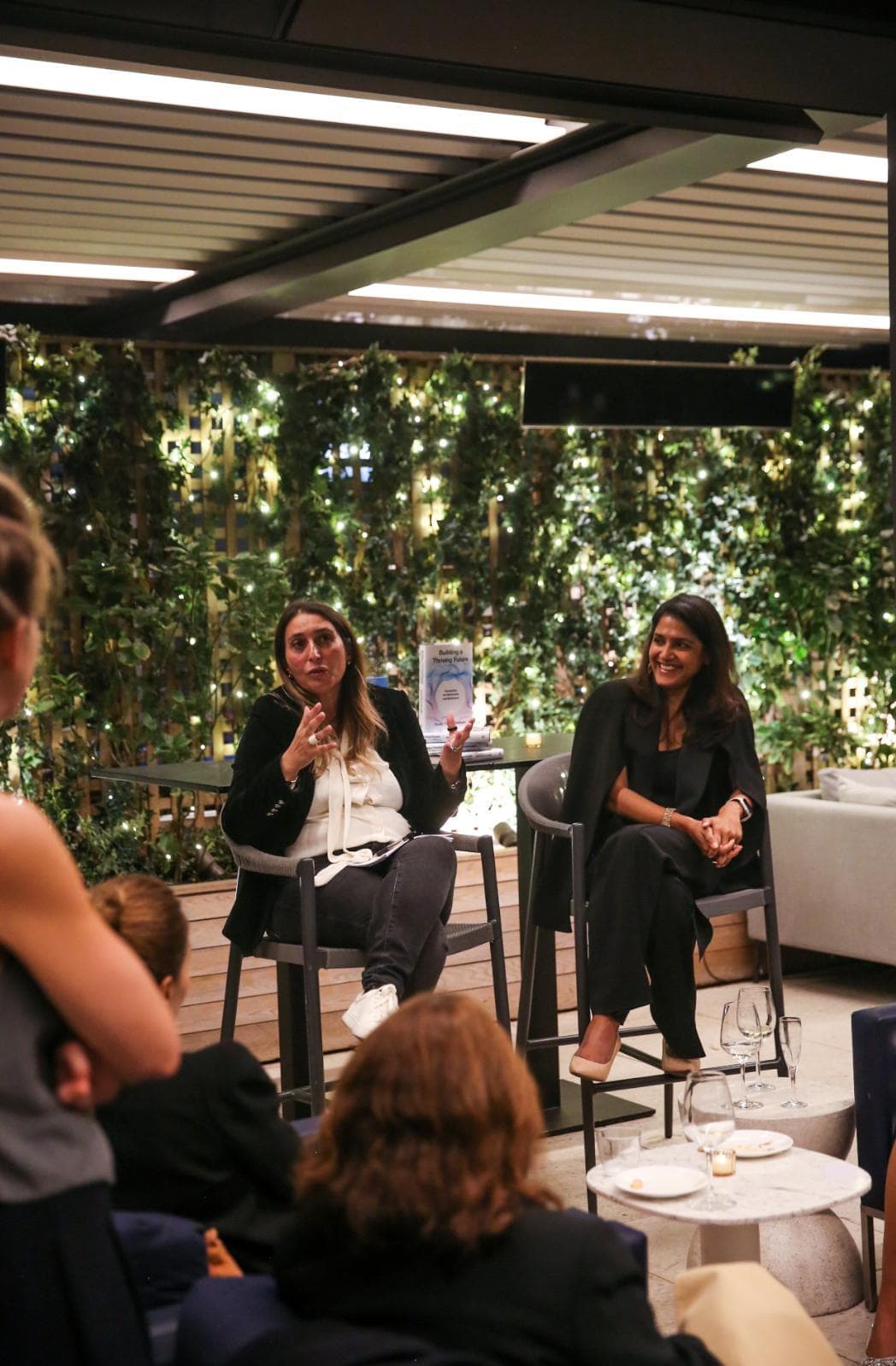
In a private salon, ahead of the launch of her latest book (Building a Thriving Future) Paola Cecchi-Dimeglio, Harvard expert on AI and Big Data, Behavioral Science, and Future of Work reminded us, AI isn’t just code. It is our mirror, our challenge, and most importantly our chance.
And it is therefore telling that in large part due to social media and AI, ‘trust’ is becoming rarer and it is shifting. The Reykjavik Index showed us for the past few years trust in women leaders has dropped, even in developed countries that appeared to be doing well (at least on magazine covers). Edelman’s 2025 Trust Barometer painted an even grimmer picture earlier this year: 61% of people no longer trust even businesses or NGOs (they’d been the last bastion per previous iterations). Decades of funded programmes are at risk being shutdown (if they haven’t already) or become invisible unless the story is told differently to the larger public.
The implication is clear: doing good isn’t enough anymore. Business and NGOs now face a dual challenge: execute on impact and communicate it effectively, in a world where messages are dissected, debated, and weaponised. The old American-style marketing story: flashy, self-congratulatory, and performative, is passé. It’s time to rethink how we tell the story: plain, bold, and credible.
The takeaway:
Maybe it’s time to stop self-aggrandising our achievements. Or making empty pledges. Or putting out press releases that say nothing. Perhaps we rethink the “Us vs Them” framing still heavy in some women’s events (yes, even in NYC).
Perhaps we finally tell the story that doing good, is good for everyone.
The work itself continues, quietly, relentlessly, and, as always, stubbornly hopeful.
Please share widely, like and comment to help us beat the algorithm! Spread the word! Women are more than a check box in world affairs!
Experts in geopolitics, economics, technology, and society delivering sharp, concise analysis on the forces shaping our world.
More from The Chief Brief
View All → Conflict Watch
May 7th Broke Two Governments. Only One PM Got the Memo
Latvia’s PM Evika Siliņa resigns, In Britain, Keir Starmer is still in Downing Street. Just about.
 Climate & Environment
Fossil Fuel Exit Club
57 countries met in Colombia to agree on how to phase out oil, gas, and coal. The US, China, Russia, India, and Saudi Arabia were not among them.
 The Macro
IMF Spring Meetings 2026: The $20 Trillion Report Nobody Talked About
The most expensive oversight of the week
 Editor's Take
Europe Is Being Rewritten. Here’s What That Actually Looks Like
From Budapest to Rome to Beijing: How Europe’s Political Certainties Collapsed in One Week

Get the Brief
Sharp analysis and global perspectives delivered to your inbox.
By subscribing, you agree to our Privacy Policy
Subscribe to The Chief Brief
Essential insights on geopolitics, business, AI, and society — delivered daily.
Subscribe to The Chief Brief
Essential insights on geopolitics, business, AI, and society — delivered daily.