Oil Volatility & The Global Pulse: How Leaders are Navigating the Iran Conflict
This Week's Brief: The Thesaurus is the New Tomahawk

The Thesaurus is the New Tomahawk
Welcome to your weekly brief and it looks like 2026 theme is now ‘Semantic Scramble’. While the missiles and drones screeching over Iran, Oman, UAE, Qatar, Kuwait, Saudi and Israel are very much a “reality;” the terminology used to describe them is now bordering on the absurd.
In the space of a week we have gone from operation, to war to what the U.S. President most recently described as a “targeted excursion.”
We’ve also learned that calling a war a “pre-emptive stabilisation event” does very little to change the price of bread or the cost of filling your car.
What it does do is give the women and men tasked with managing the fallout an enormous headache.
As Margarita Robles (Spain’s Defence Minister) spent her week reminding everyone: a “limited strike” still triggers a volatility that can derail economies.
The world knows this already: you can hide a conflict behind semantics, but you cannot hide the consequences.
Thanks for reading! Subscribe for free to receive new posts and support changing the narrative about women leading the world.
These are the stories that caught our eye, cause nothing distracts us from connecting the dots!
📌 Energy, Gold & the U.S. Dollar
📌 Nirmala Sitharaman India Fiscal Cushion 2026
📌 Japan’s economy stuck between a rock & a hard place
📌 Ursula von der Leyen Tehran Diplomacy Shift
📌 Asia’s aggressive state interventions to stabilise their economies
📌 South Korea Fuel Price Cap 30-Year High & North Korea’s Kim Yo Jong Nuclear Warning
📌 Tracking Iran’s opposition in exile, as country remains in blackout
📌 Global Conflict Watch
The Global Pulse: Energy, Gold, and the USD’s New War Footing
Following the Iran-Israel War/Conflict/Excursion on Iran and the Strait of Hormuz Blockade, global leadership has shifted from cautious diplomacy to something closer to survival mode.
The Chief Brief is tracking how some of the world’s most influential female political leaders are navigating the fallout, with some aggressive economic state intervention.
As this edition goes to press, global markets have moved from the initial panic of the Iran conflict into a tense holding pattern.
This despite Iran warning on Wednesday 11 March that the world should prepare for oil at $200 a barrel.
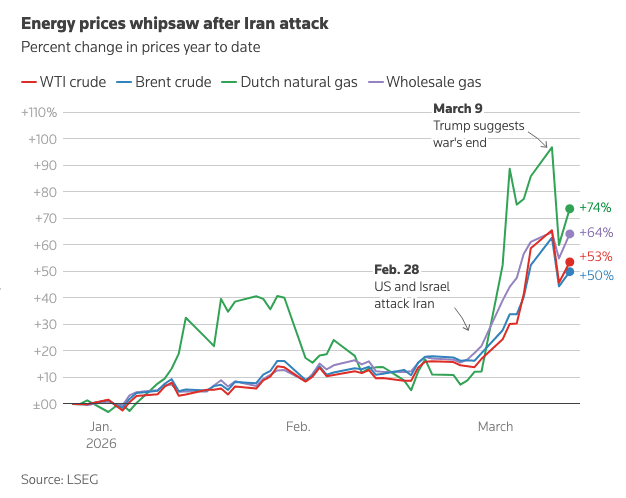
Brent crude has retreated from its $120 peak to hover around $90 per barrel, stabilised by G7 signals of a potential record-breaking 400-million-barrel release from strategic oil reserves, alongside President Trump’s rhetoric about a possible end to hostilities.
Gold has slipped to $5,191 an ounce as investors favour the high-yielding US dollar, which remains at multi-year highs against energy-dependent currencies such as the South Korean won and the Indian Rupee.
The Chief Brief Take:
The panic may have ebbed (for now). The uncertainty has not. The global economy is effectively running on diplomatic oxygen. If the Strait of Hormuz stays unviable, volatility returns overnight.
The Asian Bulwark: Stabilising the Engine Room
Asia remains the region most exposed to the disruption of roughly 20 per cent of global oil supply flowing through Hormuz. China, meanwhile, continues to hold emergency calls with regional and global counterparts., condemning the attacks as a violation of international law and calling for an immediate ceasefire and return to dialogue.
Governments across the region in the meantime have responded with unusually aggressive state interventions to ensure their national stability.
Nirmala Sitharaman – India’s Fiscal Cushion
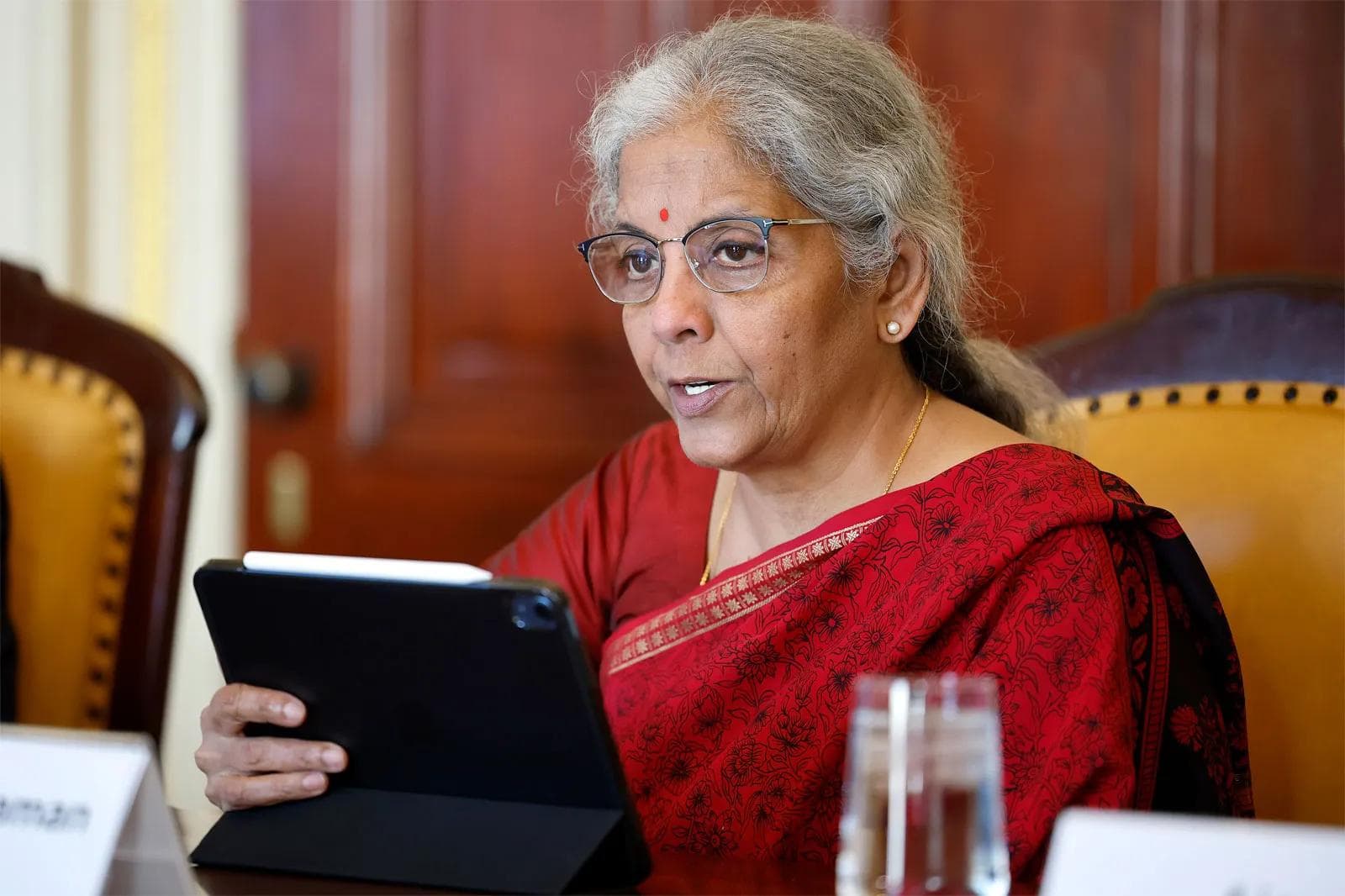
India has mitigated the economic fallout of the Iran war through a combination of aggressive fiscal shielding and pragmatic energy sourcing. Finance Minister Nirmala Sitharaman informed the Lok Sabha on March 9, 2026, that India’s low headline inflation of 2.75% provides a unique "buffer" against the recent surge in the Indian crude basket from $69 to $80 per barrel. To stabilize the domestic economy, the government has established a $12 billion Economic Stabilization Fund and secured a 30-day U.S. Treasury waiver to purchase "stranded" Russian oil, bypassing the Strait of Hormuz blockade while keeping petrol and diesel prices capped for the common citizen.
“Given that India’s inflation is near the lower bound, the impact on inflation is not estimated to be substantial at this point… the Indian basket rose from $69 to $80 per barrel [initially].”
The Chief Brief Take:
India’s economic buffer buys time, but like the rest of Asia, it still runs on imported energy.
Sanae Takaichi - Japan’s Stuck Between A Rock & A Hard Place
Japan has taken a firm security stance, stating on March 9 that while the war is not yet a “survival-threatening situation.” This is the designation under Japan’s security legislation that would allow the Japanese Self-Defence Forces to provide support to U.S. military operations in the conflict. Japan’s Prime Minister says the country is "making all necessary diplomatic efforts to help calm the situation as soon as possible" while evacuating over 200 nationals in the region.
The Prime Minister is set to meet Donald Trump later this month, with observers noting she could be asked in the interim, or at that meeting for Japanese support.
South Korea – The Price Cap Strategy
After South Korea’s equity markets triggered circuit breakers and the won approached 1,500 to the dollar, South Korea took the unprecedented step to implement the nation's first maximum fuel price cap in 30 years
“Authorities will step up monitoring to detect potential price collusion… [We will] introduce and decisively implement a price ceiling for petroleum products that have seen excessive increases.”
The Chief Brief Take:
Seoul is signalling that energy price stability is now a national security issue, not just an economic one.
North Korea – Nuclear Theatre, As Ever
Having openly backed Iran’s new Supreme Leader, North Korea’s Kim Yo Jong, the powerful sister of Kim Jong Un and Director of General Affairs, used the ongoing geopolitical chaos to issue a thinly veiled nuclear warning via state media on military exercises being conducted by South Korea and the U.S.:
“The display of power by hostile forces near our nation’s sovereign and secure areas could have unimaginable and disastrous consequences.”
North Korea has also conducted two strategic cruise missile tests this week in what appears to be classic sabre-rattling.
Managing a Crisis Not of Their Making
- Bangladesh: The government has formed a High-Level Crisis Management Committee to review policy measures and safeguard the economy from trade and remittance disruptions. It has also instituted fuel pump rationing
- Pakistan: Under a “War Austerity Plan” the government has mandated a four-day workweek, shifted schools to online learning, and grounded 60% of official vehicles to conserve fuel.
- Vietnam: The government has urged businesses to implement work-from-home policies and limit personal vehicle use, while the government scrapped import duties on several petroleum products to stabilise the domestic market.
- Thailand: The government has frozen the price of LPG and suspended crude oil exports to safeguard its 92-day national reserve, reaffirming the priority of evacuating the 110,000 Thai nationals in the region.
- Indonesia: The government budget will be used to “absorb the shock” of oil price increases, while the President’s office has offered to conduct mediation to resolve the conflict.
The Chief Brief Take:
In moments of global distraction, it is worth remembering: the supply chain dilemma ensures that pain is shared globally, even when decisions are taken unilaterally.
The European Pivot: A New Strategic Realism
Brussels has signalled what may be a lasting shift towards a far more hard-edged defence posture.
The diplomatic frameworks that once defined Europe’s approach to Tehran are quietly being replaced with something more pragmatic.
Ursula von der Leyen – Moving Beyond the Old Frameworks
Speaking at the EU Ambassadors Conference on 10 March, European Commission President Ursula von der Leyen signalled a decisive shift away from the diplomatic frameworks that once surrounded the Iranian nuclear deal.
“We are now seeing a regional conflict with unintended consequences… There should be no tears shed for the Iranian regime. The people of Iran deserve freedom, dignity, and the right to decide their own future.”
The Chief Brief Take:
Europe is slowly abandoning the language of diplomacy for the language of deterrence.
Kaja Kallas – The Air Defence Bottleneck
EU foreign policy chief Kaja Kallas has been warning about what she describes as a growing global production problem.
Air defence systems are being diverted from Ukraine to the Middle East, stretching already thin supply lines.
“The same drones attacking Kyiv are now attacking our partners in the Middle East… Everyone needs air defence… so there is truly a production problem. Europe must increase production.”
The Chief Brief Take:
The modern battlefield runs on manufacturing capacity and Europe is discovering just how limited its capacity still is.
The World’s Moral Critique
Claudia Sheinbaum – Calling Out the System
Mexico’s President Claudia Sheinbaum has used the crisis to highlight what she sees as the growing paralysis of global institutions.
On 6 March she delivered a pointed reminder of the role the United Nations was supposed to play.
“Mexico will always be a factor for peace. Peace is not only the absence of war; it is the construction of justice. Now more than ever, the United Nations must be the institution that calls for the building of peace.”
Harini Amarasuriya - Managing A Humanitarian Incident
Sri Lanka will grant free one-month visas to a group rescued from Iranian vessels, allowing them to remain in Sri Lanka under humanitarian protection. There are 32 who had survived the US submarine attack on the sunk ‘Iris Dena’ frigate. Another 186 were evacuated from Iranian ship ‘Iris Bushehr.’
“We will not be taking any sides but will act on a humanitarian basis in terms of international law,” according to Sri Lanka’s Government.
The Chief Brief Take:
While major powers shift into wartime posture, parts of the Global South are openly questioning whether the international system still works.
The Frontline: Opposition in Exile
Inside Iran, the information blackout continues, making it difficult to assess whether a viable opposition movement is emerging within the country.
Monarchist circles have been discussing the grandson of the deposed Shah, who lives in exile, as a possible alternative to the current regime.
But another long-time opposition figure has been making her presence felt this week.
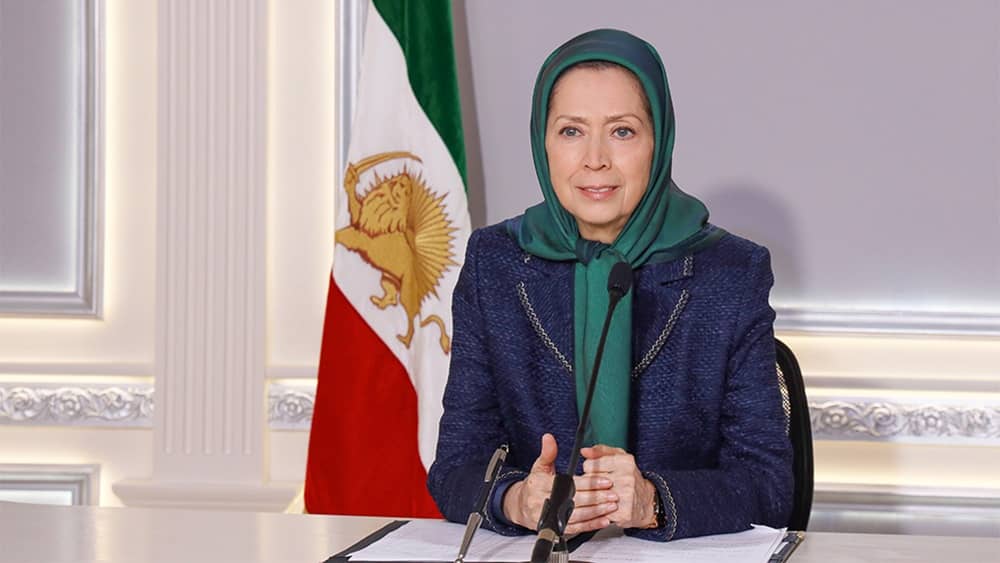
Maryam Rajavi, the President-elect of the National Council of Resistance of Iran (NCRI), has lived in Auvers-sur-Oise, France since the early 1980s.
Rajavi is not without critics, who have long questioned her movement’s funding and lifestyle. Nevertheless, for four decades she has consistently advocated for the internal overthrow of the regime and the creation of a democratic provisional government.
With reports of a potential power vacuum in Tehran, Rajavi has begun positioning her resistance movement as the only legitimate successor to Mojtaba Khamenei, Iran’s new and third Supreme Leader.
On 8 March she issued a direct appeal for defections within Iran’s security forces, arguing that such a move could prevent a prolonged civil war.
“I have urged members of the Revolutionary Guards and other forces protecting the regime to lay down their arms and surrender to the people. This is a political and national appeal aimed at preventing further bloodshed.”
The Chief Brief Take:
Regime change narratives tend to surface whenever power vacuums appear, but history tells us exile politics rarely translates easily into domestic reality.
What to Watch Next
The immediate panic in markets may have eased, but the geopolitical chessboard is still shifting beneath the surface. Three signals will determine whether this crisis stabilises — or accelerates.
1. Hormuz Stability
The Strait of Hormuz remains the world’s most dangerous economic chokepoint. Even the perception of disruption has already shaken energy markets. Any renewed interference with shipping would send oil volatility straight back into global markets.
2. The Air Defence Bottleneck
As European leaders quietly acknowledge, the world is discovering a hard limit: the industrial capacity to produce modern air defence systems. With Ukraine and the Middle East competing for the same equipment, defence manufacturing is becoming the next frontline.
3. Tehran’s Internal Dynamics
With Iran facing information blackouts and speculation about a leadership vacuum, opposition voices in exile are beginning to position themselves for a potential transition. Whether that translates into real influence inside the country remains an open question.
Chief Brief Bottom Line
The world may be waiting for the next diplomatic breakthrough - but experience tells us the economic and geopolitical consequences of war rarely stay confined to the battlefield.
Conflict Watch
17% of the world’s population of women lived in conflict zones in 2024. In 2026, that statistic is set to skyrocket.
💣 Gaza: The Palestinian Ministry of Health reported today that the total death toll since October 2023 has reached 72,135, with at least 650 of those fatalities occurring since the October 2025 ceasefire began. In a major strategic shift, Israel announced today (March 11) that it is redeploying the Golani Brigade and other ground forces from the Gaza area to the Northern Front to reinforce the border with Lebanon as clashes with Hezbollah intensify.
💣 Taiwan: Taiwan Strait is currently experiencing a "tactical lull" punctuated by a massive buildup of defensive capabilities. Taiwan’s Ministry of National Defense has detected 6 Chinese naval vessels operating around the island this week. While this follows a mysterious weeklong absence of Chinese flights in late February, patrols have resumed as Beijing monitors the U.S. Navy's commitments in the Persian Gulf.
💣 Thailand–Cambodia: Thai troops fired warning shots into the air at the Chong Sam Tae crossing after Cambodian forces reportedly approached a barbed-wire fence and engaged in what Thai officials described as "harassing behaviour" for social media content.
💣 Sudan: A drone attack hit the town of Dilling, killing seven people, including three children. The town, which the SAF retook in January 2026 after a nearly two-year siege, is a critical transit point for supplies moving toward the state capital, Kadugli. As of going to press, an estimated 25 million people (half the population) face acute hunger, with 13 million children at severe risk of starvation.
💣 Yemen: A structured pause (under tension) defines the current landscape. Yemeni Houthis have largely refrained from joining the direct U.S.-Israeli-Iranian fire.
💣 Sahel: Reports as of March 9 indicate a significant shift in the jihadist hierarchy dominating the Sahel region. A high-ranking commander of al-Qaeda-linked JNIM, known as "Saad," has reportedly defected to IS-Sahel. This is the most senior defection in years and has sparked a violent "purification" crackdown by JNIM across central Mali
💣 Ukraine–Russia: Trilateral peace talks between Ukraine, Russia, and the United States (brokered by U.S. Envoy Steve Witkoff) were scheduled for this week in Turkey/Abu Dhabi but have been postponed to next week. Ukranian President Zelenskyy has announced that Ukrainian drone experts are being sent to the Middle East to help U.S. and Gulf allies intercept Iranian-made Shahed drones.
💣 Cuba: The UN officially declared a humanitarian crisis in Cuba this week. With fuel imports halted due to the U.S. blockade, the national health system per the UN is at a "critical point"; hospitals are suffering 15-hour daily blackouts, and nearly 16,000 cancer patients have had life-saving treatments suspended.
💣 Venezuela: Chevron and Shell are finalising agreements to develop the Ayacucho 8 (heavy oil) and Carito/Pirital (light crude/gas) fields. This is part of a projected $100 billion investment to revive the sector.
A request to our subscribers
If this briefing resonates, please share and comment. Those two actions help keep The Chief Brief free and expand the reach of women’s voices analysing the world.
Help us beat the algorithm.
Women are not a checkbox in global affairs.
Experts in geopolitics, economics, technology, and society delivering sharp, concise analysis on the forces shaping our world.
More from The Chief Brief
View All → Conflict Watch
May 7th Broke Two Governments. Only One PM Got the Memo
Latvia’s PM Evika Siliņa resigns, In Britain, Keir Starmer is still in Downing Street. Just about.
 Climate & Environment
Fossil Fuel Exit Club
57 countries met in Colombia to agree on how to phase out oil, gas, and coal. The US, China, Russia, India, and Saudi Arabia were not among them.
 The Macro
IMF Spring Meetings 2026: The $20 Trillion Report Nobody Talked About
The most expensive oversight of the week
 Editor's Take
Europe Is Being Rewritten. Here’s What That Actually Looks Like
From Budapest to Rome to Beijing: How Europe’s Political Certainties Collapsed in One Week

Get the Brief
Sharp analysis and global perspectives delivered to your inbox.
By subscribing, you agree to our Privacy Policy
Subscribe to The Chief Brief
Essential insights on geopolitics, business, AI, and society — delivered daily.
Subscribe to The Chief Brief
Essential insights on geopolitics, business, AI, and society — delivered daily.