Say AI 66 times!
EU’s AI Ambitions, BoE’s AI Bubble, Japan’s New Boss, Nobel Prizes & Quiet Climate Withdrawals

From our editor
Yet another Ursula von der Leyen attempt to make the EU relevant in an increasingly uncertain world flashed on my screen this week. I’ll leave you to decide whether her pronouncements live up to the ambition Europe actually needs.
The European Commission President’s latest is a plan to boost AI adoption in the 27-member bloc, very creatively called ‘AI First’. If you sense the sarcasm in that last sentence, you’re right.
Somewhere in the sixth paragraph of her release, she finally mentions the two strategies, also very creatively named (someone somewhere must have plugged it into Perplexity/ChatGPT) — the ‘Apply AI Strategy’, claiming €1 billion to accelerate AI across all major sectors from robotics and healthcare to energy and cars.
Then there’s the AI in Science Strategy, aimed at training, retaining, and attracting the best AI talent, supported by a new initiative called RAISE (that’s going to cobble together about €3.5 billion for computing and research). And of course, she insists in the release: “We will spare no effort to make Europe an AI continent.”
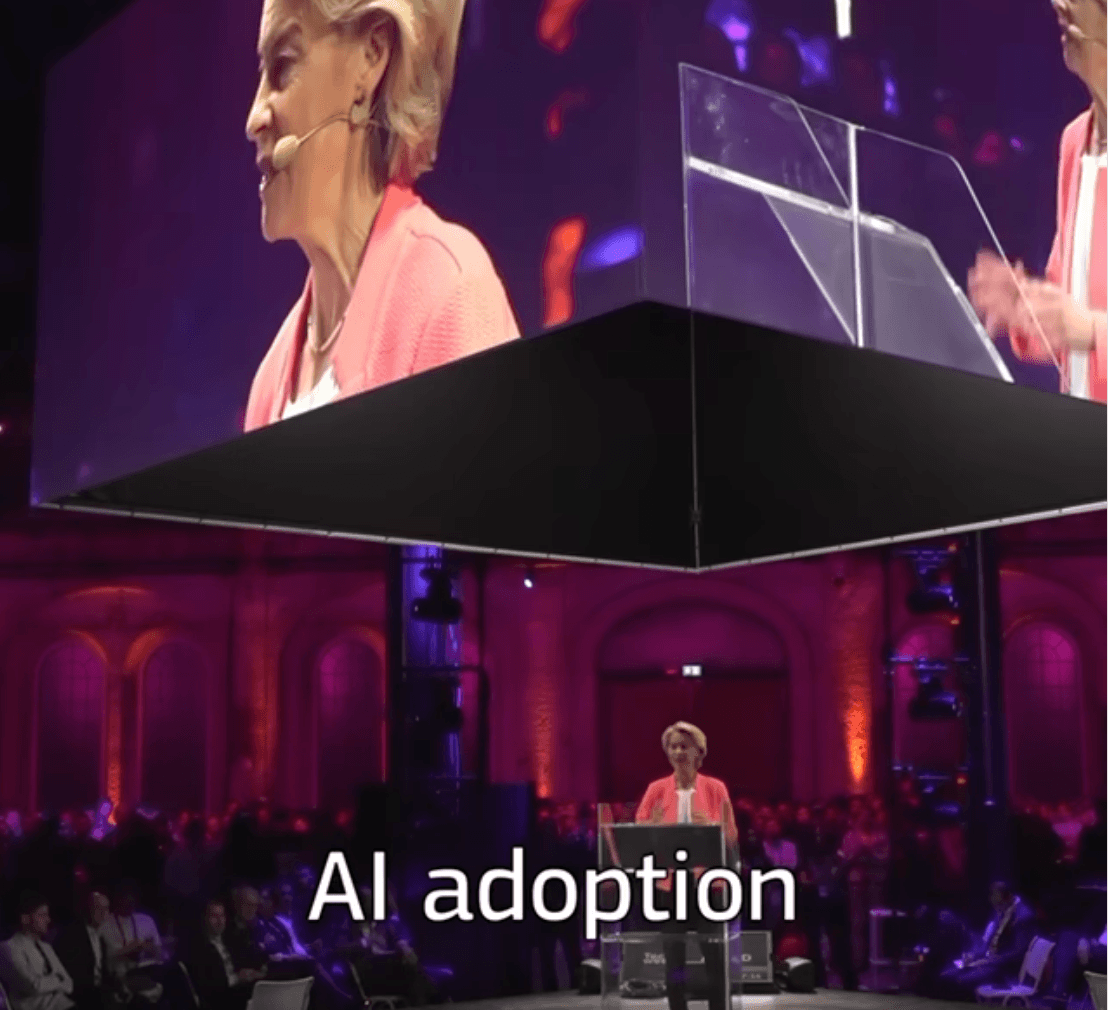
Beyond the press-release flourish about “cross-cutting challenges: accelerating time to market by linking infrastructure, data, and testing facilities; strengthening the EU workforce to be AI ready across sectors” and the vaguely named Frontier AI Initiative to corral European AI actors, it feels like a scramble not to get left behind. Then there’s the promise of the Data Union Strategy next month right at the very bottom. I’m not holding my breath for it to have any sort of teeth.
How did I mentally rank it all? Copy: 8/10. Ambition: 5/10. Delivery: far from clear. How exactly does Europe plan to catch up to Silicon Valley’s 25-year head start in data (stolen, but still data)? And how the very heck is €1 billion supposed to build AI systems uniquely geared to the SMEs von der Leyen wants to adopt it?
The EU lacks a capital markets union (debated ad nauseam for years and why the best of the bloc’s techies leave for the land where funds flow like water). We need that to let AI actors scale. The EU also definitely still doesn’t have seamless legal structures needed across 27 countries for any sort of implementation and the big stumbling bloc, scaling.
For context, OpenAI is spending $500 billion over four years on AI infrastructure in the US alone. Google as a company has dumped for example, $5 billion into the UK, another $5 billion in Belgium just yesterday and just to drive the point home- $5 billion into the state of Arkansas (there’s plenty more in that bucket for the US). The EU’s €1 billion plus the €3.5 billion for RAISE feels more like a polite suggestion than a plan.
Then there’s the inevitable energy question. Running AI at scale will devour electricity. The IEA and the ECB point to the fact that this will inevitably lead to the use of more natural gas, at a time when Europe is still figuring out how to speed up a just energy transition away from fossil fuels. I feel a tad bad for all those EU teams figuring out how to untangle red tape, build greenfield renewables, speed up permitting, attract investment, and get cross-border energy flows to work. They now have a new von der Leyen mandate to factor in, all while negotiating across Europe’s energy landscape and selling the idea to citizens.
I’m not convinced the President of the European Commission has fully thought this through. Or perhaps she’s banking on the distraction of repeating the buzzword “AI” or “Artificial Intelligence” 66 times in a thousand-word release, to make it look like Europe is leading a technological war it is already far behind in.
For the sake of 450 million Europeans, I do wish her luck.
On to This Week’s News
(These pins mark the stories with deeply buried, but globally significant signals.)
📌 Bank of England Warns of AI Bubble
📌 Shaky Trust in AI
📌 Sanae Takaichi now leads Japan’s ruling Liberal Democratic Party
📌 Kemi’s Confused Britain & A Confused Conservative Party Convention
📌 Gaza Watch: Ceasefire Announced, Greta Thunberg & Flotilla Activists Allege Torture, Italian PM Meloni Reported to ICC For War Crimes
📌 Nobel Prize for Immune Insight
📌 Nestlé has withdrawn from the Dairy Methane Action Alliance
📌 Tan Su Shan, DBS Bank CEO, is Fortune’s Most Powerful Woman in Asia
📌 Pandora, Ogilvy, Harper Collins, Church of England’s new bosses
INVESTING
Gold glitters As AI Bubble Warnings Flash
Ladies, look at your gold jewelry with love once more. The metal is having a 1970s-style comeback, up around a third (about $4,000) since April when Donald Trump’s tariff tantrum sent global trade wobbling. Gold is once again a safe haven, hedging the massive inflows into AI investments which are finally starting to feel overdone.
To that point, the Bank of England’s Financial Policy Committee (FPC) which works to make sure the UK financial system as a whole is safe is sounding an alarm. Not on gold, but on the AI bubble threatening to burst across global markets.
The Bank of England’s FPC warns on AI
The FPC isn’t sugarcoating it.
They say US tech firms chasing AI glory may be on a collision course with reality. If expectations tumble or the bubble bursts, investors could be in for a nasty shock, and the effects would not stop at the American borders. The UK markets could feel the tremor too. The FPC also flagged both upside potential and downside pitfalls, warning of looming shortages in power, data capacity, and raw materials critical to AI development. To sum up the warning:
• Bubble alert: US AI tech valuations look stretched, some flirting with dot-com heights.
• Crash risk: if expectations tumble, brace for a brutal market correction.
• Concentration danger: a fall in a few US tech giants could hammer global returns.
• UK spillover: Britain’s financial system is not immune; impact is “material.”
• Supply chains under pressure: AI depends on power, data, and raw materials; shortages could bite.
Who’s watching the risk
At the BoE’s FPC it is Liz Oakes, Gwyneth Nurse and Carolyn Wilkins (external members) are keeping an eye on things alongside Deputy Governors Sarah Breeden and Clare Lombardelli among a 12 (usually 13) member Council.
AI & TRUST
In amongst the noise, women are looking at AI with a distinctly raised eyebrow.
A Reuters Institute survey on AI’s role in journalism and society found women are less likely than men to believe generative AI will make life or society better, and more likely to think it will make things worse. Read more at Reuters Institute
Capgemini’s research adds that while confidence among women at work is rising, bias still skews who is deemed ready for the AI jobs of tomorrow. Read more at Capgemini
Meanwhile, the U.S. state of Illinois has stepped in with a hard stop. It is banning AI from acting as a therapist or diagnosing patients, though it can still handle the paperwork. Lawmakers cite the obvious risks: dodgy advice, zero accountability and the potential for serious emotional harm. Read more at Illinois State Government
POLITICS
Japan’s right turn with a twist
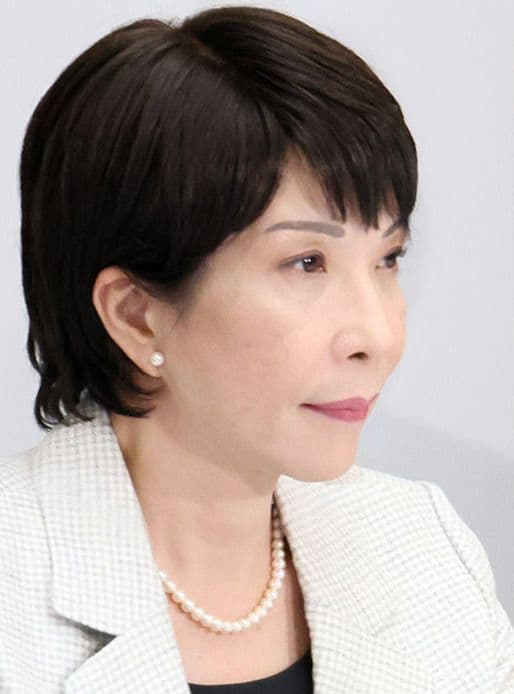
Sanae Takaichi now leads Japan’s ruling Liberal Democratic Party, setting her up to become the country’s first female prime minister. Markets cheered, the yen stumbled, and everyone from Washington to Beijing is bracing for her expansionary spending plans, looser monetary policy, and pro-business reforms. Her admirers compare her to Thatcher; her critics worry about just that comparison. Her nationalist fervour and the economic balancing act she will have to do amid complex US-Japan relations and rising tensions with China and Korea. Read more at Nikkei Asia
Kemi’s Confused Britain
Across the water, Kemi Badenoch used her first Conservative party conference speech to signal a nationalist full-court press, promising to yank Britain out of the European Convention on Human Rights, (though the Tory party misspelling of Britain on swag bag chocolates created viral competency memes) abolish immigration tribunals and reverse the Climate Change Act. Read more at Sky News
Nepal Cracks On
In Nepal, interim PM Sushila Karki is quietly focused on fixing the mess from recent anti-corruption protests, compensating victims’ families, investigating property damage, managing potential landslides and floods and stabilising the economy. This week she held a high-level security meeting to assess the country’s evolving security challenges amid mounting pressure to arrest immediate past prime minister KP Sharma Oli and erstwhile home minister Ramesh Lekhak over the Gen Z crackdown that put her in power. Read more in The Kathmandu Post
Morocco’s crackdown
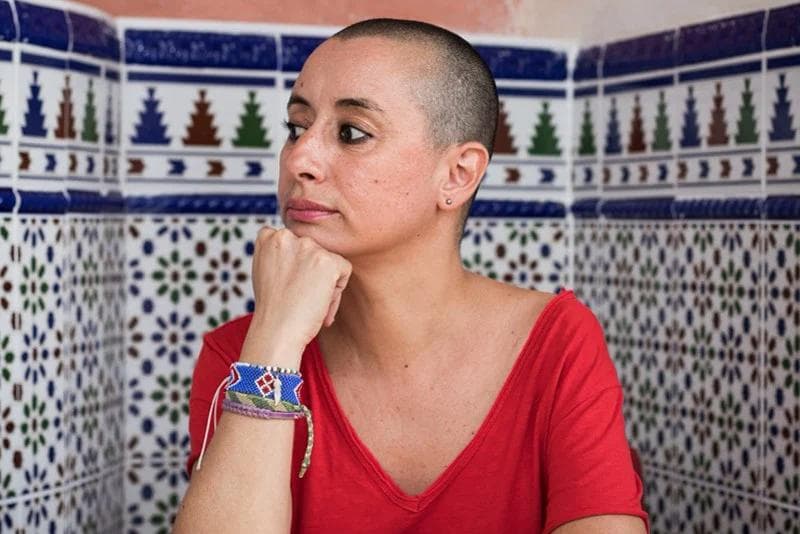
Morocco has sparked global outrage after a court upheld a 30-month sentence for activist Ibtissame Lachgar over a social media post deemed blasphemous. She had posted a picture of herself wearing a T-Shirt with the word “Allah” in Arabic followed by “is lesbian”. Read more at France 24
Africa & the UN’s WPS Rollback Concerns
UN Secretary-General António Guterres and African leaders are worried that progress on women’s roles in peace and security is slipping backward. Fragile gains are under threat as conflicts rise and local women-led groups remain underfunded. Read more at UN News
GAZA WATCH
A ceasefire has been announced. Whether it holds is the trillion dollar question. Credit is being claimed by the usual male leaders, with women involved on either side largely left out of any negotiations so we will leave that coverage to others.
A reminder though: Research shows us women’s participation increases the probability of a peace agreement lasting at least two years by 20 percent and a peace agreement lasting fifteen years by 35 percent. Read more at Council on Foreign Relations
In the meantime:
Italian War Crime Allegations
In Italy the Prime Ministerial drama has supposedly reached the ICC. Prime Minister Giorgia Meloni revealed this week, she and ministers Guido Crosetto and Antonio Tajani have been reported to the International Criminal Court (ICC) over Israel’s war in Gaza. Speaking to state TV, she called the case “unprecedented” and refused to name the complainant. Read more at The Times of Israel
Flotilla Activists Allege Torture
Swedish activist Greta Thunberg has alleged, along with other prominent activists aboard the relief flotilla siezed by Israel, that she and other detainees of the Gaza flotilla were subjected to torture in the Israeli prison they were held. Read more at Reuters
SCIENCE
Nobel for immune insight
Mary E. Brunkow and her colleagues, Fred Ramsdell and Shimon Sakaguchi win the Nobel Prize in Medicine for decoding how the immune system avoids attacking the body. Their discovery of regulatory T cells is revolutionising treatment of autoimmune diseases like Type 1 diabetes and lupus, improving organ transplants and boosting the body’s ability to fight cancer. “Their discoveries have been decisive,” said Nobel Committee chair Olle Kämpe. Read more at Nature
BUSINESS
Tan Su Shan tops Asia
Tan Su Shan, CEO of DBS Bank, has been named Fortune’s most powerful woman in Asia. The first woman to lead Southeast Asia’s biggest bank, she has driven over 1 billion (Singapore Dollars SGD)in AI projects while navigating turbulent markets. Fortune points out her leadership style has focussed on an emphasis on empathy and resilience. Read more at Fortune
China’s silicon shake-up
China’s local silicon wafer makers are moving fast to challenge global suppliers, signalling a shift in the semiconductor supply chain. Women are at the forefront: Dr Xiaoxin Qiu, founder and chair of AI chip firm Axera, was recognised in Forbes China’s 2025 Power Businesswomen list for her leadership and innovation, while Doris Hsu continues to steer GlobalWafers, a critical player in advanced semiconductor production. Their rise reflects Beijing’s push to expand domestic capabilities as global chip tensions intensify. Read more at Nikkei Asia
Nestlé backs out quietly
Nestlé has withdrawn from the Dairy Methane Action Alliance launched in 2023 to curb methane emissions from dairy farms. Methane is 30 times more potent than CO₂, yet the company offered no reason beyond a routine “review of memberships,” insisting it will still pursue net zero by 2050. Neither the company’s CEO Philipp Navratil nor its COO Stephanie Pullings Hart, offered further reasoning to step away from industry initiatives to curb climate action. Read more at ESG News
Movers & Shakers
Pandora’s passing the baton
Berta de Pablos-Barbier will take over as CEO from Alexander Lacik at Danish jewellery brand Pandora next year. The appointment signals Pandora’s evolution into full luxury having originally been founded in Copenhagen, Denmark, by Danish goldsmith Per Enevoldsen and his wife Winnie in 1982. Read more at Pandora
Publishing shake-up
HarperCollins UK CEO Charlie Redmayne has resigned, with Kate Elton stepping in as interim CEO, joining the global executive committee and reporting to HC president Brian Murray. A permanent replacement will be announced “in due course.” Read more at Publishers Weekly
Ogilvy’s new voice
Kirsty Muddle is the new CEO of Ogilvy Network for Australia and New Zealand, moving from dentsu where she led Practices & Products. Read more at Ogilvy
Faith and firsts
Dame Sarah Mullally, has been appointed the first female Archbishop of Canterbury. Her appointment continues to stir debate in Africa. Kenyan Bishop Emily Onyango called it a “new dawn.”
It’s an uncertain world out there. Our only advise - Keep your wits sharp, your eyes open, and we’ll be back with another round of global chaos and the intelligence to navigate it!
In the meantime, help us convince the algorithm these stories matter!
Experts in geopolitics, economics, technology, and society delivering sharp, concise analysis on the forces shaping our world.
More from The Chief Brief
View All → Conflict Watch
May 7th Broke Two Governments. Only One PM Got the Memo
Latvia’s PM Evika Siliņa resigns, In Britain, Keir Starmer is still in Downing Street. Just about.
 Climate & Environment
Fossil Fuel Exit Club
57 countries met in Colombia to agree on how to phase out oil, gas, and coal. The US, China, Russia, India, and Saudi Arabia were not among them.
 The Macro
IMF Spring Meetings 2026: The $20 Trillion Report Nobody Talked About
The most expensive oversight of the week
 Editor's Take
Europe Is Being Rewritten. Here’s What That Actually Looks Like
From Budapest to Rome to Beijing: How Europe’s Political Certainties Collapsed in One Week

Get the Brief
Sharp analysis and global perspectives delivered to your inbox.
By subscribing, you agree to our Privacy Policy
Subscribe to The Chief Brief
Essential insights on geopolitics, business, AI, and society — delivered daily.
Subscribe to The Chief Brief
Essential insights on geopolitics, business, AI, and society — delivered daily.