This Week's Brief
Chile shifts left, A Chancellor in tears, A Prime Minister suspended & Europeans care about the climate.. still

THE STORIES WE ARE WATCHING THIS WEEK:
(These pins mark the stories with deeply buried, but globally significant signals.)
📌 Chile’s left shifts further left
📌 Thailand’s PM suspended
📌 Tears, taunts, turbulence & a U.K. Chancellor
📌 Climate on EU minds
📌 ECB warns: Caution Ahead
📌 The Nigeria-Morocco Gas Pipeline
📌 Prada under fire for cultural appropriation & IP theft
📌 Big Bets on LatAm Women’s Football
Politics
Chile’s left shifts further left
Communist and former labour minister Jeannette Jara has clinched the presidential nomination for Chile’s ruling coalition with 60.5% of the primary vote. She had more than double the support for her centrist rival Carolina Tohá (27.7%). The move sets 51-year old Jara, up to face a surging centre and far right in Chile’s November’s general election, as the 39-year old President Gabriel Boric is barred from running again. A lawyer by training, Jara has pledged to counter right-wing momentum with “unity, dialogue, and hope.” Read more in The Guardian
Thailand’s PM suspended over leaked diplomacy
Thailand’s Constitutional Court has suspended Prime Minister Paetongtarn Shinawatra in a 7–2 ruling as it considers a case that could see her permanently removed. The complaint centres on a leaked audio recording of a call with Cambodia’s Hun Sen, in which her deferential tone on a border dispute triggered allegations of ethical misconduct. The leak, released by Hun Sen himself, has sparked protests, fractures within the coalition and rumours of military involvement. An interim prime minister has been appointed, while opposition parties have held off on a no-confidence vote pending the court’s decision. Concerns are rising over political instability in Southeast Asia’s second-largest economy, which is already slowing. Read more at DW
Tears, taunts and turbulence
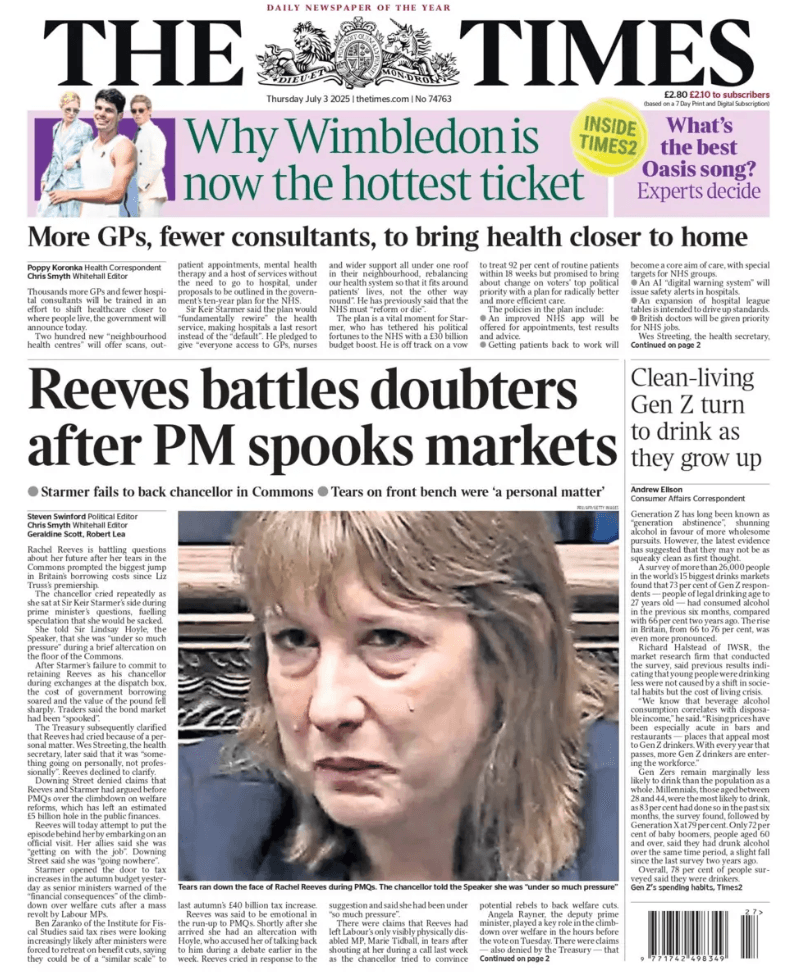
U.K. Chancellor Rachel Reeves’ visible tears in Westminster came just as markets punished Labour’s welfare U-turn, sending the pound down and government borrowing costs up. During Prime Minister’s Questions (PMQs), opposition leader Kemi Badenoch mocked the Chancellor and challenged Keir Starmer to back her. He didn’t. At least not on the spot. While Reeves’ team cited a personal issue for the tears streaming down her face, the timing spoke volumes. With questions swirling over Labour’s fiscal credibility and leadership discipline, the pressure was visible and markets knew it. Since then, Starmer has publicly insisted she’s not going anywhere. Read more in The Financial Times
Business & Economy
Climate on EU minds
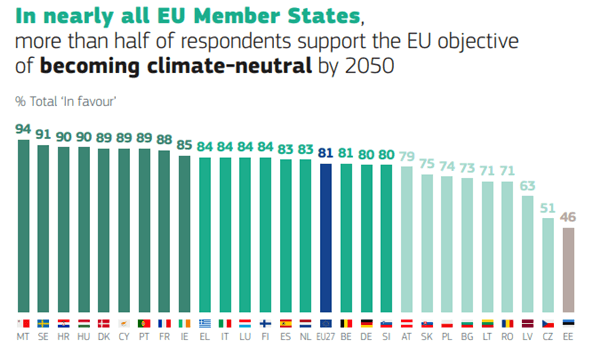
Contradicting, much of the political rhetoric of 2025, the latest Eurobarometer survey has found the large majority of Europeans continue to view climate change as a serious global threat. Read more at Eurobarometer
- 85% of respondents consider climate change a serious problem for the world. Climate change is seen as the most pressing issue in several Member States and among the top three concerns in most others.
- 81% support the EU’s goal of reaching climate neutrality by 2050.
- 88% say it is important for the EU to take action to increase renewable energy and energy efficiency.
- 38% of Europeans feel personally exposed to climate-related risks.
- In 8 Member States, more than half of citizens report feeling this exposure, particularly in Southern Europe, Poland, and Hungary.
- Citizens see national governments (66%), the EU (59%), and business and industry (58%) as best placed to tackle climate change.
- Only 28% believe individuals are best placed to effectively address the issue.
- 85% believe climate action should be a priority to improve public health, and 83% say better preparation for climate impacts will improve daily life.
“At a time when some voices claim that climate is losing political relevance, Europeans are sending a clear message: Climate still matters - deeply” - Eva Jensen, Head of Department Climate Change, Transport & Energy, European Environment Agency
Caution ahead
At the ECB Forum in Sintra, Portugal, ECB President Christine Lagarde struck a cautious tone despite inflation reaching the 2% target in June. She underscored the bank’s commitment to a flexible, data-driven approach amid ongoing economic uncertainty and geopolitical tension. Lagarde warned that inflation remains volatile and stressed the need for vigilance. The real test of her stance comes on 24 July, when the ECB will decide whether to hold or cut interest rates in what remains a finely balanced policy environment. Read more at ECB
"We have reached our inflation target, but we must remain extremely vigilant given the heightened uncertainty and volatility ahead." - Christine Lagarde, President, ECB
Nigeria-Morocco Gas Pipeline Nears Final ECOWAS Approval
The 6,900-kilometer Nigeria-Morocco Gas Pipeline, set to supply 16 West African countries, including 13 coastal and 3 landlocked nations is approaching its final institutional approval by ECOWAS heads of state.
The Pipeline’s lead Amina Benkhadra, Director General of Morocco’s National Office of Hydrocarbures and Mines (ONHYM) says the pipeline aims to enhance regional energy security, foster industrial development, and lay the groundwork for a unified electricity market. Having cleared key technical and environmental milestones, this initiative marks a significant step toward sustainable energy integration in West Africa. Read more at Morocco World News
Prada under fire for Kolhapuri-inspired sandals
Luxury fashion house Prada has admitted the Indian origins of its new sandal design after backlash from artisans and politicians. The leather, open-toe footwear shown at its Milan show was seen as identical to Kolhapuri chappals, handmade for centuries in the Indian state of Maharashtra and dating back to the 12th century. The Indian government has since said the slippers, along with 39 other products are GI Tagged. Prada has faced accusations of cultural appropriation and cultural erasure before acknowledging the sandal’s heritage. Read more at The Hindu
Thanks for reading The Chief Brief! This post is public so feel free to share it.
Life
A world-first for NHS maternity care.
The UK government is rolling out pioneering AI technology to scan NHS data in real time and flag patient safety risks, starting with maternity outcomes. Launching in November, the Maternity Outcomes Signal System will track unexpected spikes in stillbirths, neonatal deaths, and brain injuries. This, the government claims will help the Care Quality Commission (CQC) respond faster and more effectively.
Professor Meghana Pandit, Co-National Medical Director for Secondary Care, claims it a “world-first system” for detecting harm early through routine hospital data, a major step in transforming patient safety and rebuilding public trust. Read more at UK Government
Miss Indonesia contestant disqualified over pro-Israel video
Merince Kogoya, representing Highland Papua in Miss Indonesia 2025, has been disqualified after a two-year-old video resurfaced showing her waving an Israeli flag and expressing support for Jerusalem. The clip, reportedly filmed while she was studying abroad, sparked backlash in Indonesia—home to the world’s largest Muslim population and a staunch supporter of Palestine. The pageant dropped her during the quarantine phase, as diplomatic tensions around Israel remain high. Read more in The Independent
Sports
Romania cuts the glitz from gambling
Romania’s media regulator National Audiovisual Council (CNA) has banned celebrities from appearing in gambling ads, pulling the plug on star-studded promotions across TV, radio and online. The CNA voted unanimously to amend its code, now barring public, cultural, scientific and sports figures from lending their faces to betting campaigns. It’s a blow to the industry’s glamour veneer with football legends and singers like Antonia Velea fronting ads in the past. Read more at SBC News
Betting on the women’s game
Kaizen Gaming’s Betano brand will sponsor football’s CONMEBOL Copa América Femenina 2025, as part of a wider tie-up running through 2028. The women’s tournament, hosted in Ecuador next July, will bring together 10 South American national teams, now with big betting money behind it. CONMEBOL president Alejandro Domínguez called the move a boost for visibility and opportunity. Whether the sponsorship levels the playing field—or just brings the odds—remains to be seen. Read more at Copa América Femenina
The strongest signals are often buried in soft language or dismissed as minor moments. That’s why we brief you. So when the story breaks big, you already knew where it started.
Experts in geopolitics, economics, technology, and society delivering sharp, concise analysis on the forces shaping our world.
More from The Chief Brief
View All → Conflict Watch
May 7th Broke Two Governments. Only One PM Got the Memo
Latvia’s PM Evika Siliņa resigns, In Britain, Keir Starmer is still in Downing Street. Just about.
 Climate & Environment
Fossil Fuel Exit Club
57 countries met in Colombia to agree on how to phase out oil, gas, and coal. The US, China, Russia, India, and Saudi Arabia were not among them.
 The Macro
IMF Spring Meetings 2026: The $20 Trillion Report Nobody Talked About
The most expensive oversight of the week
 Editor's Take
Europe Is Being Rewritten. Here’s What That Actually Looks Like
From Budapest to Rome to Beijing: How Europe’s Political Certainties Collapsed in One Week

Get the Brief
Sharp analysis and global perspectives delivered to your inbox.
By subscribing, you agree to our Privacy Policy
Subscribe to The Chief Brief
Essential insights on geopolitics, business, AI, and society — delivered daily.
Subscribe to The Chief Brief
Essential insights on geopolitics, business, AI, and society — delivered daily.