Why a US Attack on Greenland Would END NATO
Article 5 doesn't work against its own members. Denmark's PM just confirmed it

There’s been a lot of noise lately. Since the US bombings in Caracas and the grab-and-go of Nicolás Maduro and his wife Cilia Flores, the volume has only gone up.
Adding to that noise? White House deputy chief of staff Stephen Miller’s wife, Katie Miller. The former Trump press secretary, turned podcast host and White House staffer spouse, is now seemingly the new harbinger of US foreign policy.
Her X post of a map of Greenland draped in a US flag was promptly followed by President Donald Trump and his entourage, once again airing their desire for Greenland. That has sent social media, plus the pundit panels, into overdrive.
Cue the inevitable question: would any move on Greenland trigger NATO’s Article 5? And would other NATO members really be expected to line up against the United States?
The answer is staring us in the face, so let’s clear it up
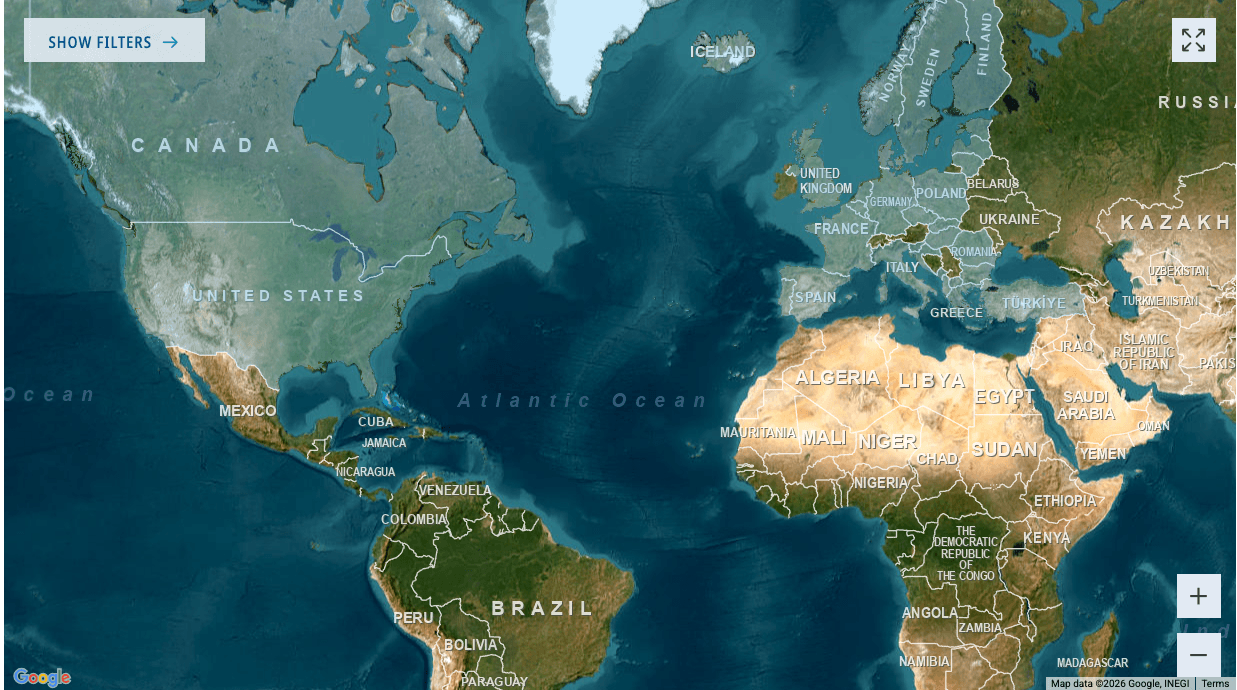
NATO is a 32-member military alliance. The largest peacetime military alliance in the world. It comprises 30 countries in Europe, two in North America. It was founded on 4 April 1949 by 12 founding members: Denmark, Belgium, Canada, France, Iceland, Italy, Luxembourg, the Netherlands, Norway, Portugal, the United Kingdom and the United States
20 more countries have since joined through 10 enlargement rounds, over the more than 75 years NATO has been around.
The treaty binding them all together is quite short. 14 articles that have never been renegotiated, with, as NATO explains: “in-built flexibility” and with each ally having “the possibility to implement the text in accordance with its capabilities and circumstances.”
Since 1949, Article 5 has been invoked exactly once: after the 9/11 attacks on the United States.
Listen carefully to the language coming from NATO leaders and there isn’t even a whisper of Article 5 being triggered.
Denmark’s prime minister, Mette Frederiksen, has been blunt instead: a US invasion of Greenland would spell “the end of NATO.”
That isn’t hyperbole.
Article 5 was never designed for one NATO member attacking another. It exists to deter and respond to, external threats to the alliance. It is NOT a legal mechanism for managing harm caused from within.
“The Parties agree that an armed attack against one or more of them in Europe or North America shall be considered an attack against them all and consequently they agree that, if such an armed attack occurs, each of them, in exercise of the right of individual or collective self-defence recognized by Article 51 of the Charter of the United Nations, will assist the Party or Parties so attacked by taking forthwith, individually and in concert with the other Parties, such action as it deems necessary, including the use of armed force, to restore and maintain the security of the North Atlantic area.
Any such armed attack and all measures taken as a result thereof shall immediately be reported to the Security Council. Such measures shall be terminated when the Security Council has taken the measures necessary to restore and maintain international peace and security.” Article 5, NATO
Yes, the text says an armed attack on one ally is treated as an attack on all, with each state taking whatever action it deems necessary, including force. But the “deems necessary” bit is purposefully vague. It was written in after all, to pacify American reservations about the depth of its military obligations, post the second world war.
Also, the clause itself is explicitly anchored to Article 51 of the UN Charter: self defence against an outside aggressor.
“Nothing in the present Charter shall impair the inherent right of individual or collective self-defence if an armed attack occurs against a Member of the United Nations, until the Security Council has taken measures necessary to maintain international peace and security. Measures taken by Members in the exercise of this right of self-defence shall be immediately reported to the Security Council and shall not in any way affect the authority and responsibility of the Security Council under the present Charter to take at any time such action as it deems necessary in order to maintain or restore international peace and security.” - Article 51 of the UN Charter
In NATO’s lived reality, that vagueness and who attacks whom to trigger Article 5, is NOT up for debate. It is explicitly for non-NATO attacks. And while conjecture about its use has existed as long as the alliance has, it has never been triggered. Sans that one singular time after 9/11.
It’s not been triggered for the war in Ukraine, which poses real and present danger to Europe.
Or think back to the Korean War (not triggered), Cold War (not triggered) or in more recent times when Syria shot down a Turkish jet in 2012. That event that was downgraded to an Article 4 (triggered 9 times since 1949).
“The Parties will consult together whenever, in the opinion of any of them, the territorial integrity, political independence or security of any of the Parties is threatened.” - Article 4 NATO
Internal alliance crises are handled politically. Through pressure, isolation or in the worst case scenario, perhaps suspension (it's never happened yet).
It is not handled by asking allies to mobilise militarily against one of their own.
Another point to remember is all major NATO decisions require consensus. That means any single member can veto collective action. Think back to as recently as the delays in giving Sweden and Finland NATO membership. The holdup? Turkey’s objections.
If a NATO country openly attacked another, the first move would not be collective defence.
It would be to treat that state as having placed itself outside NATO solidarity.
An attack therefore would have political fallout, but not immediate NATO collective military action.
Bottom line: Article 5 is a shield.
It protects NATO members from external enemies.
It is also why an attack from within wouldn’t unite the alliance. It would actually trigger a political crisis severe enough to break it.
As forewarned by the Danish Prime Minister.
A Request to our subscribers:
Please SHARE & COMMENT if what we cover resonates with you! These are the only ways to keep The Chief Brief free and possible, by expanding our reach!
Help us beat the algorithm! Spread the word! Women are more than a check box in the world’s affairs!
Experts in geopolitics, economics, technology, and society delivering sharp, concise analysis on the forces shaping our world.
More from The Chief Brief
View All → Conflict Watch
May 7th Broke Two Governments. Only One PM Got the Memo
Latvia’s PM Evika Siliņa resigns, In Britain, Keir Starmer is still in Downing Street. Just about.
 Climate & Environment
Fossil Fuel Exit Club
57 countries met in Colombia to agree on how to phase out oil, gas, and coal. The US, China, Russia, India, and Saudi Arabia were not among them.
 The Macro
IMF Spring Meetings 2026: The $20 Trillion Report Nobody Talked About
The most expensive oversight of the week
 Editor's Take
Europe Is Being Rewritten. Here’s What That Actually Looks Like
From Budapest to Rome to Beijing: How Europe’s Political Certainties Collapsed in One Week

Get the Brief
Sharp analysis and global perspectives delivered to your inbox.
By subscribing, you agree to our Privacy Policy
Subscribe to The Chief Brief
Essential insights on geopolitics, business, AI, and society — delivered daily.
Subscribe to The Chief Brief
Essential insights on geopolitics, business, AI, and society — delivered daily.